
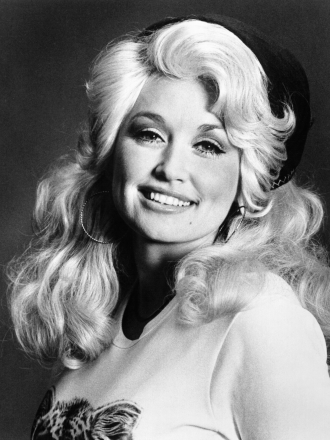
When I was around 5 years old, I remember stuffing two tennis balls into my T- shirt (as if they were boobs) and joking to my family, ‘Look I'm Dolly Parton!’ I made the grown ups laugh. We weren't ridiculing her, though. My family loved her, I loved her. She encouraged you to laugh along with her.
I loved her music. When I was little, my mum would often sing ‘Wildflowers’ from the Trio album. I was enchanted by the words and the story. When ‘Eagle When She Flies’ was released in the early ‘90s, we watched a documentary about it, and I started to realise what a gifted songwriter she was. I loved her later Bluegrass albums. Songs like ‘Little Sparrow’ and ‘Marry Me’ sound traditional, like they've been sung for generations. But Dolly's words are almost poetic, letting you know there is a clever and creative mind behind them.
As I grew up, I started to appreciate her in other ways too. I became a more worked out class struggle feminist. I began to see that there was a feminist layer to the irreverent Dolly I'd always laughed along with. I appreciated how she used her image to play with sexist stereotypes - (‘I make jokes about it, but it's the truth that I kind of patterned my look after the town tramp....Momma used to say, 'Aw, she's just trash' and I thought, that's what I want to be when I grow up. Trash’).
I re-watched ‘9 to 5’. By this time, I was a 24-year-old blonde woman working on London Underground, on the receiving end of sexual harassment not a million miles removed from the predatory behaviour of Dolly's boss in the film. Watching it, I had a bit of a lightbulb moment. It helped me clarify what was really going on at work, the starting point for trying to change it, (although we never got as far as holding our boss hostage and taking over our workplace).
Dolly said she wrote the song 9 to 5 while waiting on the film set, drumming the beat on her long fingernails. As well as being politically sharp - ‘It's a rich man's game, no matter what you call it/And you spend your life putting money in his wallet’ - it also feels heart-felt, and rings with lived experience.
Dolly had fought sexist men in a male-dominated industry (look at the glint in her eye when she sings, ‘Just because I'm blonde don't think I'm dumb cos this dumb blonde ain't nobody's fool’), but despite her triumph, she never appeared to hold herself above other women.
Her songs didn't just give voice to her own struggles. She wrote as if she heard and saw women in general. The day after she died, I listened to ‘Eagle When She Flies’, probably for the first time in 30 years. As an older woman now, with kids and, like most women, a few tough experiences behind me, I couldn't believe it. I thought, ‘This could be about me or just about every woman I know’:
‘She's been there, god knows she's been there
She has seen and done it all
She's a woman, she knows how to dish it out or take it all
Her heart's as soft as feathers, still she weathers stormy skies
And she's a sparrow when she's broken
But she's an eagle when she flies’
With this song, and so many others, Dolly gave voice and recognition to millions of women. She described the contradictions in our lives and emotions and said, ‘Don't you dare underestimate us’.
Comments?We welcome replies, corrections and debate pieces. Contact us