
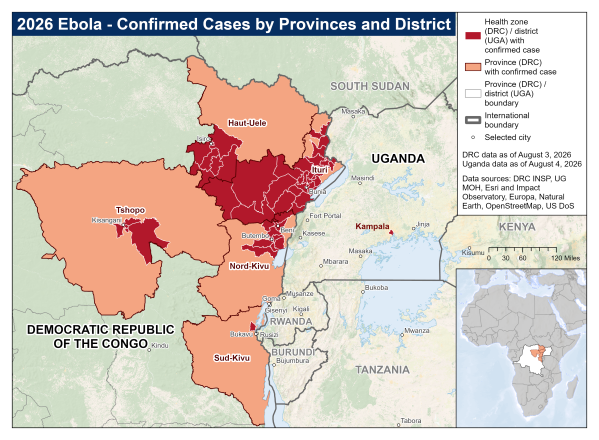
Since the current Ebola epidemic in DR Congo was first detected in May, it has become the fastest-spreading outbreak of the disease and is likely to become the most deadly since Ebola was first identified in 1976. This strain of Ebola is one for which there is no effective vaccine. It is concentrated in the conflict-ravaged eastern province of Ituri, and probably has killed more than 4,000 people.
The outbreak likely started in January but went unnoticed because of cuts in overseas aid, particularly the Trump-Musk dismantling of USAID. There is also well-justified distrust among the local population towards the central government nearly 4,000 km away in Kinshasa. The response to the epidemic has been limited by aid cuts. The WHO estimates that the response has less than half the funding needed. Infection prevention and control teams are overstretched, while clinics, ambulances and isolation facilities are inadequate. USAID cuts have also impacted clean-water programmes.
Health workers are paying the price. By late July, 37 had died, amid serious shortages of appropriate protective equipment. Many have also gone for months without wages, which are low anyway. In July, doctors, nurses and security workers at the Elikya Ebola Treatment Center in Bunia stopped work, following an earlier strike at Bunia General Hospital over unpaid salaries.
There have also been protests and attacks on Ebola treatment centres by the local population. Such actions can further endanger both health workers and patients. But the hostility is based on experience of the 2018–20 Ebola epidemic in the region. International agencies worked with Congolese security forces and armed groups, sometimes paying them directly.
The response became increasingly militarised, while local people complained that international organisations had done little about years of war and violence. Suspected patients were sometimes reportedly removed by force and funerals broken up, in one case leading to a fatal shooting. There were also sexual abuses of local women by aid and medical workers.
Consequently, the local population views the current response with suspicion. They see resources mobilised against Ebola while cholera, typhoid, poverty and armed conflict are neglected. Containing this outbreak will require not only properly paid health workers and restored levels of aid and health funding, but also a response that treats local communities as participants. □
Comments?We welcome replies, corrections and debate pieces. Contact us