
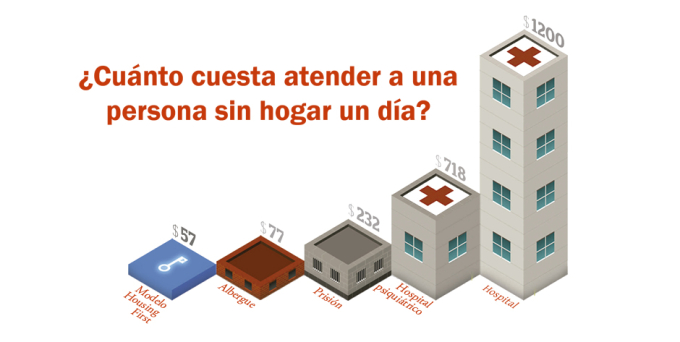
Image: a Catalan "housing first" graphic, from Wikimedia Commons

Whilst this article is mainly about Finland's Housing First programme, and future articles will look in detail at Andy Burnham's pledge to build more council housing, I first want to say something about the sacking of Steve Reed as Housing Secretary.
This is a good thing.
Reed was not an effective Housing Secretary. Housebuilding fell during his time in office and there was no chance of meeting the target of 1.5 million new homes. He also seemed more interested in wearing red "Build, Baby, Build" Maga style hats than actually building homes.
More importantly, Steve Reed does not believe in council housing.
To him, a home is not primarily a place to live and build a life. It is an asset: something to own, sell, pass on to family members, rent out or use to secure a loan. He does not want homes built; he wants assets built.
In that respect, he would agree with Margaret Thatcher:
"I want a capital-earning democracy. Every man and woman a capitalist. Housing is the start. If you're a man or woman of property, you've got something. So every man a capitalist, and every man a man of property."
Had Andy Burnham kept Reed in post, then he would have self-sabotaged his own housing pledge.
But enough about Reed. Let's turn to Finland.
In his policy speech on 29 June, Andy Burnham said:
"Having this focus on council homes again, on having them in all parts of the country, it will represent a decisive shift to a more preventative and productive state, adopting a national Housing First philosophy as has been pioneered so successfully in Finland."
So what is Housing First?
The normal approach to tackling homelessness is by offering temporary shelter and expecting people to deal with problems such as addiction, ill health or unemployment before they can qualify for permanent housing. Finland took a different approach. It recognised that a secure home is often the starting point for solving these problems, not the reward at the end of the process.
Housing First is built on a simple idea: provide people with a permanent home first, then give them the support they need. People are not required to be sober, in treatment or in work before they are housed. Instead, support is tailored to their individual circumstances once they have the stability of a secure home.
Since adopting Housing First as national policy in 2007, Finland has invested heavily in affordable housing and converted many hostels and shelters into permanent homes.
The results have been impressive. Finland is widely recognised as the only EU country where homelessness has consistently fallen in recent years. Between 2008 and 2017, the number of homeless people living in hostels and boarding houses fell by 76%, while long-term homelessness also declined sharply.
Finland's experience shows that homelessness is not inevitable. By treating housing as a social right rather than something people must earn, it has demonstrated that lasting change is possible. If the UK adopted the same approach, it would be a significant step forward.
Comments?We welcome replies, corrections and debate pieces. Contact us