
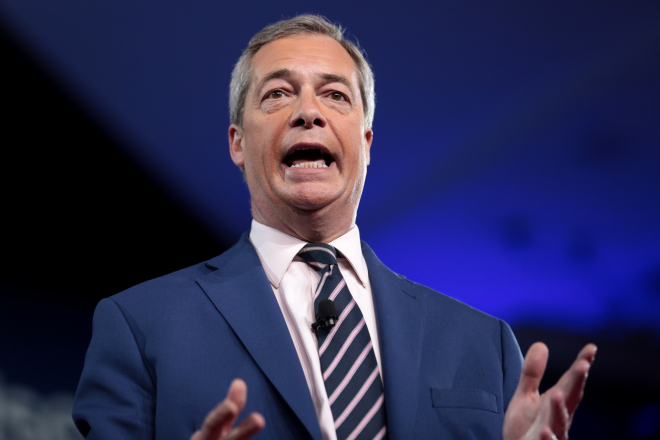
Nigel Farage has resigned (7 July) as MP for Clacton-on-Sea, thus forcing a by-election, which he says he will contest. The move was announced in a live broadcast in which the leader of Reform claimed he was the victim of an establishment stitch-up and an unfair press campaign.
The resignation closely follows a Sunday Times report claiming Farage took money from convicted fraudster aristocrat George Cottrell — they say to pay for social media workers — as well as the use of a five storey Georgian townhouse near Buckingham Palace. Farage was already being investigated by the Parliamentary Standards Commissioner over £5 million gifted to him shortly before the general election by crypto-billionaire Christopher Harborne. This was, very potentially, money he should have declared on being elected under Parliamentary rules.
In response all the major parties have said they will not contest a by-election on the grounds that it is a farce. While we are usually mistrustful of cross-party agreements, in this case, the tactic has a lot of validity. Farage's statement was, of course, so much “sand-in-your-eyes” nonsense but the resignation does mean he will avoid being immediately scrutinised by Parliament over breaking the rules. These rules are not there to protect the "establishment". They are not perfect but they do ensure that political donations to MPs are transparent. Farage, like his good friend Donald Trump, doesn't think the rules apply to him.
The fact that the Sunday Times had revealed the address of his daughter had, Farage said, pushed him over the edge and made him so angry he now wanted to let the people of Clacton-on-Sea decide who is right and who is wrong on the issues. But if Farage doesn't follow the rules and keeps back information on who's financing him, how can voters make up their minds on, for example, whether or not he had been unduly influenced by his crypto-business pals, when he argued that this business (which, let's just say has a high volume of bad actors) should be less regulated.
In the broadcast, Farage claimed the donations were for his own personal security, but he has said many other things about how the money was used. And the Guardian revealed Farage had bought a £1.4 million property in cash shortly after receiving the Harborne money. Farage claimed he was not in politics at the time he received Harborne's money. However the Guardian has reported at least some of the money was received after Farage became "a person of significant control" for the Reform corporate entity.
Farage also said that he had given up the opportunity to earn loads of cash, in the USA right now, or, as in the past, as a city trader. That's also dubious. Since being elected to Parliament, according to his own register of interests, Farage has “earned” or received income and gifts worth £2,336,966 (source desmog.com), the biggest amount from gold traders Direct Bullion. This is on top of his £94,000 a year MP’s salary. So far from being a victim of the establishment he's doing rather well out of being an MP. Maybe the fault is in our eyes - our nasty suspicious communistic eyes - and we just hate "entrepreneurial MPs" who have second, third…. tenth jobs, and cling to an outdated notion that MPs should… focus on their job as an MP.
Farage's move may yet pave the way for him to hand over Reform’s leadership to a titular head or even give up — he has form here. Even if he won the by-election against Count Binface and the Monster Raving Loony Party he won't escape answering to to the Parliamentary standards commissioner. On the other hand, further right organisations such as Restore Britain, who are also boycotting the by-election, may benefit from Reform’s troubles.
But for now, let’s take some pleasure from the cracks appearing in Reform’s success story.
Comments?We welcome replies, corrections and debate pieces. Contact us