
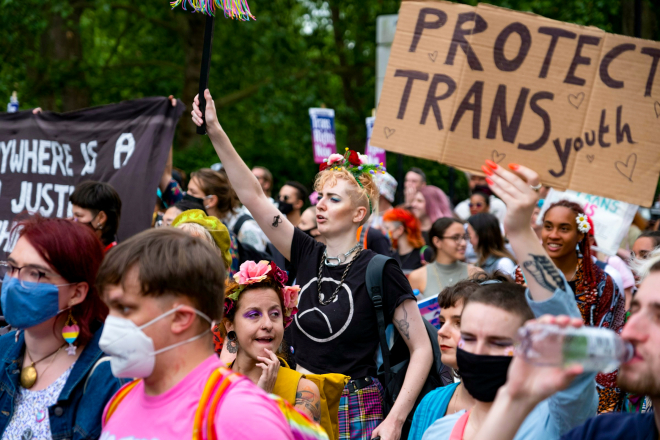
The new Equality and Human Rights Commission (EHRC) Code of Practice on trans rights (or lack of them) is still being scrutinised by Parliament. The regulation forty sitting days since the Code’s publication on 21 May takes us to some time mid-July. Even after that period, it is up to the government to decide when it comes into force.
An “Early Day Motion” submitted by the left Labour MP Nadia Whittome to “disapprove” the Code now (30 June) has 160 signatures, 86 Labour, 54 Liberal Democrat, plus various Plaid Cymru, SNP, SDLP, Green, and Independent.
But the most likely way for actual Parliamentary scrutiny would be for the Lib Dems to use an “opposition day” debate — far from sure-fire. The closest to scrutiny we may have come is the questions posed to the Women and Equality Committee Hearing on 9 June.
That showed the Code as riddled with ambiguity and contradictions. EHRC chief Mary-Ann Stephenson told MPs that “the EHRC cannot tell service providers ‘check for this’, or ‘check for that’” to exclude trans women from facilities, “because ‘that’ does not exist”, “that” being a ready proof of birth sex.
The by-no-means-woke City of London Corporation has said that the Code will not deter it from keeping Hampstead Heath Women’s Ponds trans-inclusive, and seems confident it can see off legal challenges from the trans-exclusionary campaign Sex Matters.
But LGBT+ Labour, the official but opaque affiliated socialist society, has announced details of its AGM and Emergency General Meeting, following the suspension of last year’s event, when it decided it could not conduct committee elections without breaking the law.
Legal
“Having engaged with the Labour Party before subsequently seeking legal advice, we were advised that proceeding with our elections without any changes — i.e., with the Women’s Officer position and gender quotes open to Trans Women — would pose significant legal risk to the organisation”.
They have decided that elections will now be to the National Committee without specific positions. That incoming committee can then allocate roles among itself.
“The positive action quotas for Women will also no longer exist, although the National Committee will retain the option to propose a re-introduction of the quotas, subject to members’ approval at a future EGM.”
Challenge
The outgoing committee have urged that these changes are endorsed. It remains to be seen whether a challenge to the Labour-right-dominated committee, as proposed in 2025, will emerge. A left challenge and a slate willing to challenge the previous committee’s conservatism would be welcome.
The Labour Party itself has indicated no shift from its decision this year (objected to by all the affiliated unions) to make its women’s conference (26 September) trans-exclusionary. It is difficult to see how it can be “legal” to have trans-inclusive swimming pools but “illegal” to have trans-inclusive conferences.
The Code as it stands, with its ambiguities, is a licence for anti-trans vigilantes. The official Office for Equality and Opportunity impact assessment warns that trans people, already at disproportionate risk of violence and sexual assault, could face increased danger from the Code.
Comments?We welcome replies, corrections and debate pieces. Contact us