
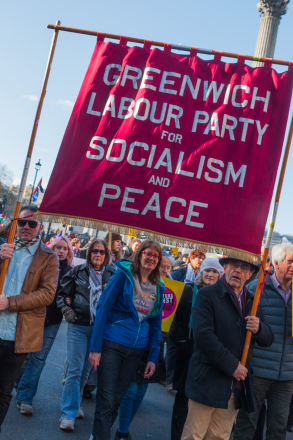
It looks unlikely that Keir Starmer can hang on as Labour leader, even if Andy Burnham loses the Makerfield by-election on 18 June and so cannot become an MP and contest the leadership. Good. Much better that Starmer is replaced by a new Labour leader than by Farage in the next general election.
After almost twenty grinding years (2007-9 crash, Cameron-Osborne austerity, Covid lockdowns, hits from Brexit, 2022-3 inflation, now Trump-tariffs and Trump-Iran-war dislocation), millions of people are fed up with Keir Starmer’s grey version of “strong, stable government”, as many were with Theresa May’s version in 2017. And now we have eight years more of exasperation.
In recent articles we have referred to recent history of the Australian Labor Party (structurally similar to the British) to show that what leadership ousters open up “below” can be more important than personal merits or demerits “above”.
In 2012 life-long supposedly-left Labor leader Anna Bligh, in Queensland, was replaced by life-long Labour rightist Annastacia Palaszczuk, and the result was an opening-up and shift to the left — because the leftist Electrical Trades Union was willing and able to push hard when the parliamentarians were in disarray. In 2010 life-long Labor leftist Julia Gillard ousted life-long Labour rightist Kevin Rudd as federal prime minister. That was a turn to the right — because the replacement was shaped by Labor deference to the demands of the big mining companies.
Andy Burnham is Andy Burnham — once Blairite, once Brownite, once soft-Corbynite, and now signalling his closeness to the right and (so rumour suggests) to a deal with Wes Streeting to take the leadership without much fight as long as Streeting then gets a top job.
Yet we want Andy Burnham to beat Reform in Makerfield. A “protest” there by staying home or voting Green is really a backhanded vote for Reform. If Burnham loses in Makerfield, the case for change in Labour will be even stronger, but demoralisation within Labour will make it harder to shape that change as more than a re-facing of the same old rubbish.
Initiative
The recent Restore Labour Democracy initiative is one of very few such initiatives in Labour’s history to be headed up by trade union leaders, rather than passively assented to by them. Its chief problem is vagueness and lack of action.
We want the left MPs to try to get a left candidate like Bell Ribeiro-Addy onto the ballot paper, and make a fuss about it. We will push them. In the end they will or they won’t.
Rank and file activists must act whatever the left MPs do or don’t do. We can use the affiliated unions’ channels, clogged though they are, to push unions to speak out at union conferences and at the National Executive (and in local Labour Parties, through union delegates).
In local Labour Parties, we can draw some young people, and some of those who have become despondent and inactive, into demanding a “reset”.
Labour’s rulebook needs changing. Straight away, the purge regime needs dropping. High-handed interpretations need quashing (such as “rigging” the priorities ballot at conference by publishing motions only hours before the ballot and not publishing at all the huge numbers “ruled out”). The unions have a majority on the Conference Arrangements Committee and could change that regardless of what Starmer or Streeting or Burnham say.
And CLPs and unions need to use the channels that exist even in today’s rules, for challenges and references-back, a hundred times more energetically.
We will work for unions and activists to insist on implementation of Labour conference policies on wealth tax, Indefinite Leave to Remain, housebuilding, green conversion, insourcing in public services, and more. To insist that the Employment Rights Act is implemented quickly and in full, and followed up by more.
In short, we will work to open up space for sharper left policies to be pushed through, and rebuild an active left in the Labour party capable of pushing and calling to account whomever replaces Starmer.
Uphill
We know it is uphill work. But by doing that, we will also be doing irreplaceable work to push back Reform. That requires united-front labour-movement mobilisation. It will be much stronger if local Labour Parties are revived, and Young Labour groups launched. Trades Councils, these days, are often weak.
And pushing back Reform requires a large-scale political alternative which, at the minimum, shows workers there is life and animation in the labour movement, and the possibility, if we stir ourselves, of winning serious political gains or even of cohering a sizeable revolutionary class-struggle wing in the movement.
That is a long road to travel. But giving up on the labour movement, and scaling ourselves down instead to “vote Green and hope” or to “give up on politics, and just scratch together the best we can for each street counter-mobilisation”, is turning off into short-cuts which can’t reach the destination.
Comments?We welcome replies, corrections and debate pieces. Contact us