
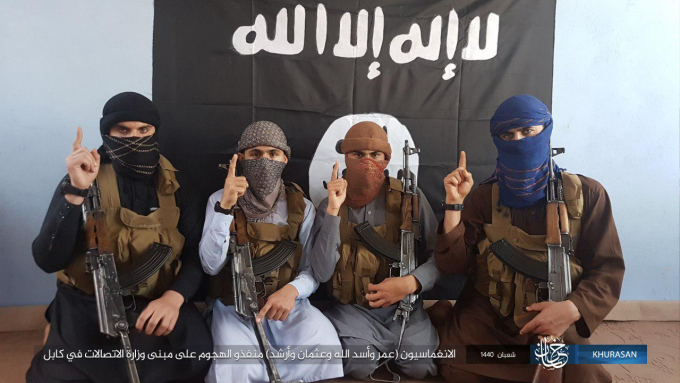
Fighting between Pakistan and Afghanistan has continued despite peace talks mediated by China. There have been various border skirmishes for months, but these became much more violent in February after Pakistan carried out airstrikes. These came after a suicide bombing at a Shia mosque in Pakistan’s capital Islamabad, which Islamic State Khorasan Province (ISKP) claimed credit for.
In mid-March Pakistan hit a drug rehabilitation hospital in Kabul, killing hundreds according to the UN. Afghanistan does not have an airforce, but has seen some success with small drone attacks.
These strikes on Afghanistan have nominally targeted ISKP and Pakistani Taliban (TTP) sites, although they have struck government targets as well. The Pakistani government has accused the Afghan Taliban government of providing sanctuary, weapons, and funding to the TTP: at a minimum, the first of these is certainly true.
The TTP is an Islamist paramilitary group which is based out of northwest Pakistan which neighbours Afghanistan, and many of their bases are across the border. They have carried out countless attacks and suicide bombings in Pakistan, but are probably most famous globally for the attempted assassination of woman’s education activist Malala Yousafzai in 2012.
ISKP was founded in January 2015 by Afghan and Pakistani Islamists who had organised to send volunteers to fight alongside Al-Qaeda in the Syrian Civil War: this particularly included members of the TTP who would end up forming ISKP, such as its first leader Hafiz Saeed Khan. They criticised the Taliban as “nationalists” who made too many concessions to local customs (relative to global Islamic norms), and for their closeness to the ISI (the Pakistani security services).
Complicated
The Taliban government and ISKP are openly hostile to one another, but their relationship with the TTP is more complicated. They (reportedly) cooperated during the 2021 offensive that brought the Taliban to power, and the government fears cracking down too heavily on the TTP as it would push them closer to ISKP.
The fighting has killed hundreds of civilians (largely but not exclusively in Afghanistan). In early March the UN said that over 115,000 Afghan civilians had been displaced, and this number has surely risen by now. Many Afghans have tried and failed to cross into Pakistan, and there is a long-running government crackdown against Afghan refugees. Over 146,000 have been deported in 2026, and over a million were deported in 2025 - this has included people who were born (and some whose parents were born) in Afghanistan.
Escalation
This escalation has happened alongside and despite the prestige the Pakistani government has earned in being the central mediator of the US-Iran war. The decades-long relatively friendly relations between the Pakistani state and the Taliban have frayed since 2021, and they now see the Taliban government as an Indian proxy. Within Pakistan the matter is further complicated by the fact that Imran Khan’s Pakistan Movement for Justice (PTI) is in power in Khyber Pakhtunkhwa, the province bordering Afghanistan where the TTP and other groups are strong.
The Pakistani state is no reliable or principled enemy of the violent religious bigots it is now bombing, whether the Taliban government or TTP and ISKP. It long supported the Taliban as part of its “strategic depth” policy of seeking an Islamist government in Afghanistan to prevent encirclement between India and an (initially) Soviet-backed Afghanistan.
Equally, the Taliban government in Afghanistan is the implacable enemy of the country’s working class, women, religious and ethnic minorities, and democrats, who are caught between their own government and the Pakistani bombardment.
Comments?We welcome replies, corrections and debate pieces. Contact us