
Sectarian or communalist tension is nothing new in Ireland. What is novel, and worrying, however, is the rise of generalised anti-migrant sentiment and activity in recent years.
Localised and scattered protests against the housing of refugees in temporary shelters took place in several localities in Ireland in late 2022. According to the Irish police, there were over 300 such protests in several counties throughout that year.
Since then, the protests have developed into a more organised and connected movement, with a substantial cross-border and transnational dynamic.
There were further protests in the summer 2024, such as riots in Coolock in Dublin when opposition to converting an industrial site into asylum accommodation escalated into arson, barricades and violent clashes with police.
At the same time as the far-right mobilisation in Britain following the Southport stabbing attack, there was rioting and attacks on migrant-owned shops in Belfast. Last summer, 2025, saw several nights of anti-migrant riots in Ballymena, driving many families out of the town.
Some of the overall backdrop to these events is economic. The Irish government’s failure to process asylum claims in a fair and timely manner has led to the use of temporary accommodation, such as hotels, old office blocks and sports halls. In the context of a severe housing crises, far-right agitators have been able to stir up discontent about shortages in housing, services and provision towards migrants.
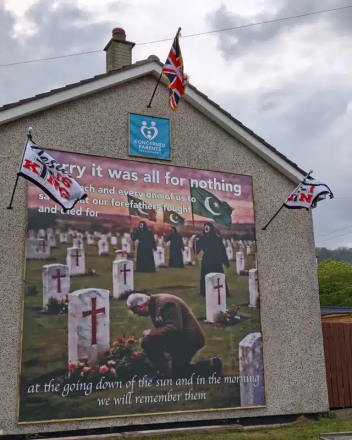
There are more organised forces at work, however, and evidence of cross-border co-operation between the Irish far right and Ulster loyalist groups.
The earliest visible sign of this was when representatives from the anti-immigration group “Coolock Says No” travelled to Belfast for the protests in August 2024.
There has been further such collaboration, with Ulster flags appearing at events in Limerick and the presence of agitators from the 26-Counties in Ballymena in 2025.
Wider Ties
Beyond this, there are wider ties to the British far-right. Former loyalist paramilitary killer Glen Kane, who was involved in the Belfast protests, was charged under public order legislation for possessing British National Party (BNP) and Britain First materials.
Some Irish far-right influences have also forged connections with former Ulster Volunteer Force (UVF) members, as well as wider UK far-right figures including Jim Dowson, Nick Griffin, “Tommy Robinson” and Mark Collett.
At the same time, events in Ireland are increasingly amplified by global far-right networks, particularly in Britain, Europe and North America. While there may be limited personal connections to these wider movements, Irish activity can become a wider transnational talking point, reinforcing far-right talking points which frame immigration as a demographic threat to “Western civilisation”, White or Christian identities, or “women and children”.
Grossly, some of these forces take Ireland’s anti-colonial history and reference points and repurpose them to their own racist purposes.
Official Ireland has long prided itself, rather smugly, on the relative lack of an organised far right in the country. Looking to the commitments of the three major political parties on immigration, however, Fine Gael, in the 2024 election campaign, promised “stronger border security” while Fianna Fail talked about managing “migration pressures”, including establishing a new Border Management Agency to enable security at ports of entry. Sinn Féin, meanwhile, called for “audits” of services in communities where international protection seeker accommodation centres are set up.
Referendum
Indeed, the same political establishment called a referendum in 2004 which removed automatic entitlement to birthright citizenship, in place since the foundation of the Irish state. The then Irish Government argued that the children of migrant parents did not have “sufficient connections” to live in Ireland as Irish citizens born in Ireland. This pandered to moral panics about migration, including “opportunistic” migrants using maternity services, which were widespread since at least the mid-1990s.
That all said, the uptick in violent anti-migrant activity on both sides of the border is a relatively new and concerning phenomenon. It is all the more dangerous for its connections to a wider far-right ecosystem internationally.
In April, trade unions mobilised against an anti-migrant protest in Coleraine, Co. Derry.
NIPSA Northern Ireland Deputy General Secretary, Patrick Mulholland (a member of Militant Left, the Irish section of the Committee for a Workers’ International), was involved in organising a counter-demonstration.
He said that while his union regularly attends demonstrations calling for more social housing and to defend public services that women and children rely on, “the people who are at this demonstration today, the far right demonstration, are never on the demonstrations which take place to advance those issues. They are always on the side of division. They are never there to put forward a positive message.”
The Coleraine counter-demonstration shows that the labour movement should take the lead in confronting the anti-migrant right, with clear answers to the social problems on which the racists feed.
Comments?We welcome replies, corrections and debate pieces. Contact us