
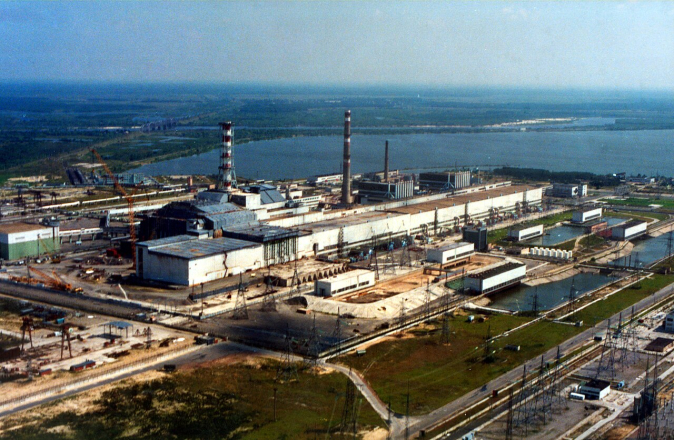
This year marks the 40th anniversary of the Chernobyl disaster. At 01:23:45 on 26 April 1986, Reactor Number 4 at the Nuclear Power Plant near Pripyat in the Ukrainian SSR, then part of the Soviet Union, exploded. It remains the worst accident in the history of the industry.
When the International Nuclear Event Scale (INES) was introduced in 1990, Chernobyl was the only incident to be rated 7. The only subsequent event to do so was the 2011 Fukushima disaster in Japan. Fukushima, triggered by an earthquake and tsunami, was much better controlled than Chernobyl (although the evacuation orders around Fukishima were probably overdone, causing many more deaths to frail or elderly people in transit than came from the accident itself). Chernobyl is a story of extreme bureaucratic mismanagement at all levels: design of the plant, management of the plant, and response once the disaster was underway.
The accident occurred during a scheduled test of the emergency backup systems.
The reactor type, the RBMK class, still in operation across Russia, is unlike any used outside the USSR. It was optimised for rapid construction and minimised requirement for off-site precision parts. It was in effect a scaled up version of the first generation of USSR reactors, whose principal purpose was to generate plutonium for use in weapons.
The design uses graphite rather than water as moderator to allow lower-grade uranium to be used as fuel. These graphite cores were built to enormous sizes to achieve maximum economies of scale.
In the contemporary debate around nuclear power it is not uncommon for more anarchism-influenced comrades to be hostile to nuclear power on the basis that the scale and concentration of the technology lends itself to concentration of political power. This is not a criticism we would share. Many technical and ecological questions require coordination at a vast scale. Then they also need a commensurate breadth of democratic participation and accountability: socialist planning. It was a total lack of such workers’ power, or even of minimal bourgeois-democratic or trade-union controls, that determined the way the disaster unfolded.
This size of the graphite cores increases their power in absolute terms. But it makes it harder to detect any defects as they develop. Moreover even relatively it makes the system more volatile: it becomes harder to monitor reactivity, particularly as it varied within the core. Size also partially explains the failure to construct a distinct containment structure, due to additional cost.
The reactor had been built in 1983. The safety test should have been carried out before it came online, but the breakneck pace required to reach targets for the plant’s construction had led to it being postponed on several occasions. Reactor 4 was signed off and began supplying power to the Kyiv region with the proviso that the test be carried out at the earliest opportunity.
Catastrophe
When it was finally carried out, a combination of factors conspired to precipitate a catastrophic failure.
The aim of the test had been to determine the readiness of the emergency diesel-powered back-up pumps to keep water flowing through the reactor in the event of a loss of power. It required disabling the emergency cooling system, a temporary reduction in output, then briefly, a full shutdown.
The fact that Chernobyl 4 was already connected to the grid meant such an interruption was difficult to manage, particularly in the context of the growing economic crisis in the USSR in the mid 1980s. The test had been scheduled for the day shift on 25 April, but was postponed again at the behest of the local grid controller, as another local power station went offline and factories were under pressure to meet quotas for the end of the month.
This last minute delay meant the test was handed over to the night shift, a less experienced team who were given no prior notice or additional support.
By the time the test was finally given the go ahead the reactor had been held at reduced power for a much longer period than stipulated by protocol, with the emergency cooling system disconnected. The low-power state had led to the buildup of inert xenon gas that acted to slow the nuclear reaction. The control room responded by removing the boron control rods to try and maintain reactivity. Again they went beyond stated limits. They began to lose control of the reactor.
The design allowed for a “positive void coefficient” whereby if bubbles of steam form in coolant water, reactivity increases, which in turn generates heat, generating more steam, creating a runaway positive feedback loop. As reactivity bounced back, this is exactly what began to happen.
As power began to surge the operatives pushed the emergency “scram” button, a function common to all nuclear reactor designs to shut them down in the event of such a loss of control. In an RBMK this was called the AZ-5 button and actuated the simultaneous insertion of all the boron rods into the reactor.
The fatal flaw in those control rods was that while their main body was boron, they were graphite tipped. Graphite increases reactivity and, as the tips entered the reactor, it spiked again. The rods jammed and there was no longer any means to constrain further reactivity increase.
Explosions
There were two explosions in quick succession. The first was a steam explosion. There is some debate about the nature of the second. Their effect was to blow the top off the reactor and expose the uranium-fuelled core to the open air, ejecting material from inside the reactor which was dispersed as both chunks of burning debris to immediate surroundings and lighter particles into the atmosphere. A fire within what was left of the core then began to further propel radioactive dust into the air. The vertical emission of radioactivity from the core was enough to make the air directly above glow blue as it was ionised.
This was an accident completely outside of what was considered possible. Initial radiation readings maxed out the available measuring equipment, which was assumed to be faulty. Plant operatives were sent out without protective gear to manually open valves to run coolant through a reactor that no longer existed. Many of these were the first victims of lethal radiation exposure.
The most apparent immediate emergency was the fire which spread to the roof, which, to save money, had been laid with flammable bitumen, against design specifications.
The first responders to the incident were the local fire brigade. Firefighters were not trained or equipped to deal with a radioactive incident of this kind. Many of these would also quickly be exposed to fatal radiation doses and would die in the next few weeks. Accounts from these firefighters vary as to how much they even understood about the dangers posed.
Much of the preoccupation of the Soviet authorities in their immediate response was to control the flow of information and retain a semblance of normality. Phone lines were cut and the adjacent reactors were kept operating. As the morning came, children started playing outside, people swam in the river, and a wedding went ahead.
Comments?We welcome replies, corrections and debate pieces. Contact us