
Why did so much of the global left immediately, the very next day, celebrate the crimes against humanity committed by Hamas on 7 October 2023? Why do such people consistently back clerical-fascist and genocidal Hamas? And why do they see Israel and Zionism as the embodiment of all evil in the world?
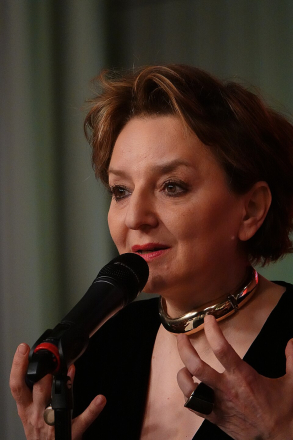
These are the questions addressed by the Moroccan-born Israeli-French academic Eva Illouz in “8 October: Genealogy of a Virtuous Hatred”.
Illouz answers her questions by tracing the evolution — the genealogy referred to in the booklet’s title — of French Theory, Critical Theory and “decolonialism”. Successive sideswipes at Judith Butler make her work entertaining as well as enlightening.
Illouz is no fan of identity politics, the hallmark and end point of this genealogy.
Prior to 7 October: “The misdemeanours of identity politics consisted of nothing worse than abandoning universalism, economy and class in favour of relativism, ‘race’ and culture, plus invoking the mantra of intersectionality and transforming white into a guilt-laden colour.”
As of 8 October: “These politics turned out to be more dangerous. They now resemble a quasi-religious worldview which imbues its adepts with an eschatological mission of redemption, and identifies radical evil with Israel.”
The genealogy begins with French Theory. Like its forerunners — de Sade, Nietzsche, Heidegger (Nazi philosopher) and Schmitt (Nazi jurist) — French Theory exhibited “an irrational rejection of reason, universalist morality, liberalism, technology and the western world.”
As French Theory evolved into Critical Theory, it came to be defined by four characteristics.
Pantextualism: In contrast to the Marxist understanding of society as “machines, labour contracts and hours, property and wages, classes and relations of production”, society was viewed as “a massive network of signs, texts, discourses and discursive formations.”
Powerism (“pouvoirisme”): Power was not something located in real-world class-based rule. It was “the ultimate signifier to be extracted from texts, an abstract and devoid-of-agency power, which embraces the totality of textual practices and social spheres.”
Super-critique: Not to be confused with Marx’ advocacy of “ruthless criticism of everything existing”, Critical Theory “no longer distinguished between science and myth, deconstruction freed itself from any epistemological anchoring; … tracking down oppressions also had to be surpassed by ever more virulent denunciations.”
Wandering structures: Illouz’s savaging of this characteristic borders on cruelty: “An ahistorical theory-centrism, a theoretical imperialism which has changed into such a closed system that it can ignore any interaction with the real world, a static devoid-of agency concept of pure abstraction; lacking an empirical existence, it can be transferred from one context to another.”
Decolonialism
Decolonialism is a specific manifestation of Critical Theory: “It emphasises the projection of abstract and invisible concepts onto reality, powerism, and the dichotomy between repressive structure and resistance …. Colonialism is thus transformed into a wandering structure. Colonialism is no longer a historical event but a [timeless] social structure.”
Illouz goes on to explain how Critical Theory’s characteristics, located in its anti-Enlightenment and anti-Western Manicheanism, and given a final twist by decolonialism, result in a conceptualism of Israel (and Zionism) as the ultimate evil.
Israel is “added to the axis of evil to which whiteness, privilege, colonialism, capitalism, masculinity and climate change belong.” Israel, it is claimed, is guilty of all these crimes.
This coexists with a “transcendental antizionism” which has “nothing to do with the concrete deeds of the state of Israel or the policies of its government but which ascribes an immeasurable power to Israel and extends to all Jews throughout the world.”
Opposition to Israel and Zionism is elevated to the level of a moral obligation. But, in reality, it is “a new form of antisemitism which presents itself as virtuous ideology”, one in which “hatred of Israelis embodies virtue itself”.
The mass murder, sexual violence, sadistic mutilations, abductions and snuff videos of 7 October are therefore hailed as heroic antizionist “resistance” — a key concept of decolonialism — and effortlessly justified by “contemporary progressives (who) consider it their calling to free the world from the state of Israel.”
As Illouz puts it: “When the Enlightenment and its virtues have been meticulously deconstructed and rejected, antizionism becomes the sole virtue capable of rallying those who have deconstructed everything.”
Illouz’s book is only 90 pages, but impossible to do justice to in a short review. Ruthlessly incisive, it provides a highly readable explanation of the ongoing and escalating explosion of post-7-October “virtuous antisemitism”.
Comments?We welcome replies, corrections and debate pieces. Contact us