
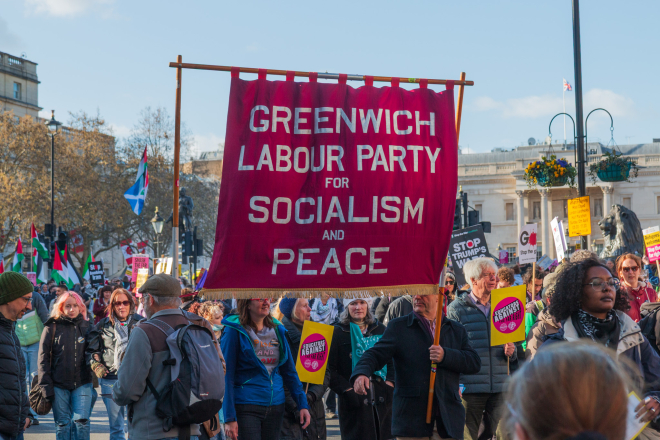
The 16 March Restore Labour Democracy rally attracted 350 people online. Speakers included Andrea Egan (Unison) and Steve Wright (FBU) as well as Campaign Group MPs, Momentum and CLPD. The linked statement had already attracted the support of five trade union leaders, 25 Labour MPs, political groups such as Labour Left Internationalists and Momentum, and affiliated socialist societies such as the Socialist Health Association and Socialist Educational Association.
The statement points out that “a narrow, factional agenda is being imposed upon the Party and that this is increasingly unpopular with the public.” Members can add their names to “call on all those in the Parliamentary Labour Party, affiliated trade unions, and the wider Party membership who value and respect the vitally important role played by Labour Party and trade union members to join us in these efforts”.
Second Statement
A second statement, Reset the Labour Party, has followed, designed not as a rival but as a base for the joint slate for the Labour National Executive Committee constituency places of Mainstream and the Centre Left Grassroots Alliance (CLGA), and attracting similar levels of MP and trade union support.
This second statement goes further than the first, in linking the need for Labour democracy to the question of Labour policy, referring to “continued underfunding of public services and local government, and the pandering to the talking points of the far right”. It calls for “a different path: fair taxation of the wealthiest, real investment in public services, taking essential services like energy and water into democratic ownership, and promoting peace and internationalism abroad”.
Basis
There is a lot unsaid and much to clarify, but this provides some basis for a political discussion in branches and CLPs about Labour NEC nominations (which most CLPs will decide in May or June). All too often these can go through on the nod, or end up in a “three of yours, three of ours” arrangement between left and right. Worse, there are Labour left-wingers who don’t make it to their branch or CLP meetings to push for any slate at all, or for left conference delegates (to be decided with a 26 June deadline: motions mostly come later).
CLGA and Mainstream are also backing candidates for the National Policy Forum.
The CLGA is not an organisation so much as an agreement between groups, mainly the Campaign for Labour Party Democracy and Momentum. It does not organise in CLPs, and nor (these days) do its constituent parts.
Mainstream is very bland in its prospectus, but it does appear to want to allow or even help party members to organise local groups, which, of course, once organised, need not and will not be limited by Mainstream’s halfway politics.
It is early days for Mainstream. It did almost nothing at Labour conference 2025, attendance at its monthly online meetings has started to drop after an initial flurry of enthusiasm, and it still only has an “interim” council. But it could provide space to restart the local Labour left organising which had a beginning of revival against the disabled benefit cuts.
Comments?We welcome replies, corrections and debate pieces. Contact us