
Pic:
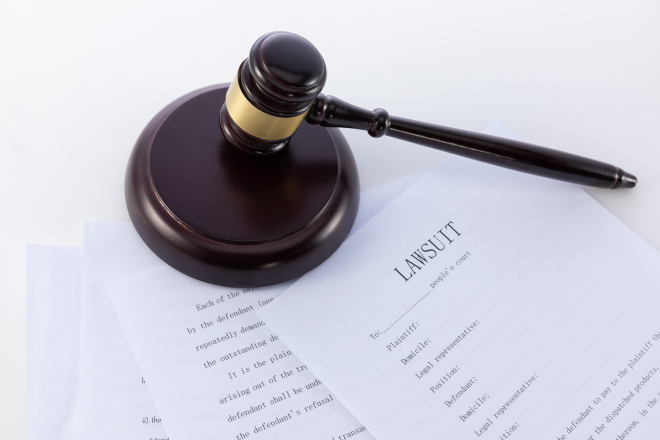
On 20 February, the US Supreme Court ruled many of Trump's tariffs illegal. Although lower federal courts have made many rulings against Trump, which he has generally swerved without being fundamentally thwarted, this is the first important Supreme Court decision not to go Trump's way other than its disallowing of the National Guard being sent into Chicago.
The decision was not a surprise. In the Court's hearings on the issue, in early November 2025, some Trump-appointed judges, as well as the three liberal members of the court, had asked pointed questions.
By now, with his Iran war and his scattergun State of the Union Address on 24 February, Trump probably hopes most people have forgotten. But the tariff decision was important. Trump responded by immediately imposing 10% blanket tariffs (on exactly which countries, and whether in addition to or instead of other tariffs is still not clear), then within hours raised that to 15%. The legal authority he used for those tariffs requires approval by Congress within 150 days, but Trump also has other options.
An op-ed for The Economist magazine concludes: "Although the broad discretionary and arbitrary scope of the IEEPA approach [the main legal pretext used by Trump so far, now disallowed] may be gone, many other cudgels remain. The president has ample authority under other statutes to rebuild the tariff wall, albeit with somewhat greater difficulty and many more holes…" It throws "some sand in the tariff wheels - cases must be filed, reports must be written and findings must be issued before pronouncements take effect - but the threat of tariffs remains real".
In principle the Supreme Court decision opens the door for US businesses and maybe even consumers to claim refunds for the payments they made for the tariffs now ruled unlawful. But that can will be kicked down the road for a long time.
The Supreme Court decision is also another fracture within the MAGA political block. There have been and are others. The prospect of such fractures defeating Trumpism, or even just Trump, still depends on the US labour movement mobilising adequately to take advantage of them, with actions like the 23 January general strike in Minneapolis, which was followed by Trump withdrawing ICE from the city.
The next No Kings protest day is 28 March. The question is whether union participation will be token contingents, or serious mobilisations.
The fundamental shift in the shape of the world market was initiated by Trump 1.0, and slowed but not reversed by Biden, who did not mend Trump 1.0's effective destruction of the WTO (World Trade Organisation) or comprehensively reverse Trump 1.0's tariffs against China.
Trump 2.0 has hugely accelerated the shift. It is now slowed down again. But it continues.
The world market of neo-liberal "high globalisation", from 1990 to 2008 or maybe even 2016, was one of predictable and generally low trade barriers. Capitalists could happily plan to get supplies and components for products from a range of countries. Capitalist governments could woo footloose global capital to their countries while promising them secure world-market terms for supplies and sales.
That world market is being replaced – incrementally, not all at once – by one of overlapping and less stable trade deals. We are in a period of transition, where many zig-zags and crises are possible, indeed likely.
Other than China, which had the power to face Trump down and limit tariffs by tariff-retaliation, other capitalist governments generally still want to avoid retaliation. The EU has talked about retaliation against the USA, but not done it, instead hurrying on its own trade deals with Mercosur (the South American Common Market) and with India.
But all this has happened so far in a still-expanding world economy. US capitalism is still expanding, but on the basis of three "bubbles", AI, cryptocurrency, and non-bank finance, any one of which could burst and trigger not only a US, but a world, crisis. The new trade regime, by clogging the channels, will make such a crisis harder to resolve; and the crisis can trigger further clogging of channels.
The transition period is one of increased economic instability and also greater threat of war (as we can see in the case of Iran right now).
The fundamental socialist answer is that of workers' unity across borders, support for migrant and asylum rights, and opposition to increased militarism. Starmer's idea of getting a special deal with Trump, to serve which he appointed Mandelson as ambassador, is almost as discredited now as Mandelson himself. The labour movement should instead orient to reversing Brexit and reducing the barriers between Britain and other European countries, and especially to cross-Channel freedom of movement and workers' unity.
Comments?We welcome replies, corrections and debate pieces. Contact us