
Bas Hardy’s article “Racism, housing and Winfred Atwell” (Solidarity 760) had me searching in the archive.
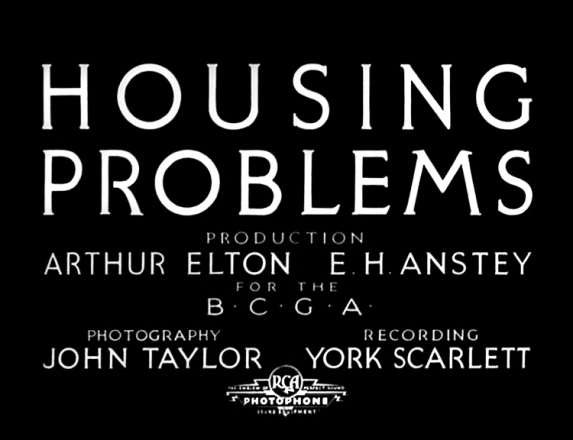
Housing Problems (1935), directed by Edgar Anstey and Arthur Elton, was one of the key films in the British documentary movement of the 1930s and introduced techniques which are now commonplace in documentary. In the film, slum dwellers in Stepney speak directly to the camera about the appalling conditions they are forced to live in: overcrowding, vermin infestation, cramped and damp rooms, and innumerable structural problems.
Direct address to the camera was new and much talked about, although today it looks rather stiff and formal.
Graham Greene, writing in the Spectator, asked his readers to “compare the characters in Housing Problems with the frightened ironed-out personalities with censored scripts whom the BBC present as documentary.”
It wasn’t quite so straightforward; Ruby Grierson (sister of John Grierson, the producer) worked with the speakers beforehand, although she didn’t coach them. The film was sponsored by the gas industry and much was made of their role in supporting new dwellings where people were rehoused. The overall approach was described by John Corner, in his book on documentary, as “managerialist.”
There is no sign of any self-activity or campaigning by the people of Stepney. They are shown as victims of capitalism to be delivered from their suffering by the powers-that-be. Nevertheless, Housing Problems, along with Coalface (made in the same year), was an important landmark in the history of documentary.
Comments?We welcome replies, corrections and debate pieces. Contact us