
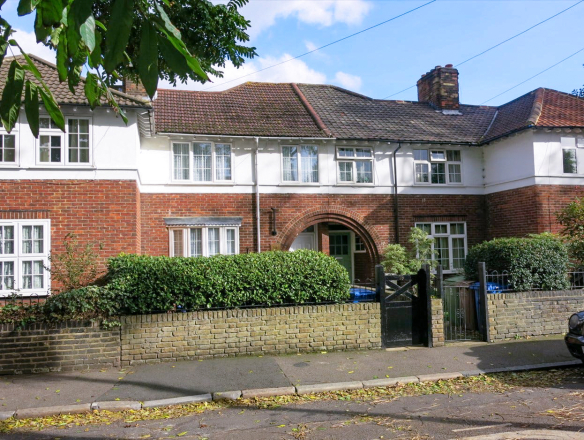
Picture: Wilson Grove
There has always been a housing crisis in Britain. Engels wrote about it in the 1870s and a century later people were still living in some of the Salford slums he described. Even in the time of “full employment”, homelessness had not gone away as the groundbreaking BBC TV drama Cathy Come Home reminded viewers in 1966.
The housing crisis in Britain was drastically worsened by the “right to buy” legislation in the early days of the Thatcher government, involving a massive sell off of communally owned assets, namely council housing.
It was a form of social engineering. The intent was to transform sections of the working class into property owners and therefore Tory voters. Discounts of up to 70% were offered, and, together with other knock down sales of public assets, that served to keep the Tories in office for nearly two decades. At the same time, councils were barred from building new housing. That bar has been lifted only marginally in recent years (2,260 council homes built in England in 2024-25).
The flogging off of council houses turned them from homes into marketable assets. Over 40% of the maybe two million council homes sold since then have been acquired by private landlords who are renting them out, often at exorbitant rates.
A major vote-driver in Zohran Mamdani’s election campaign was the resentment felt by New Yorkers that although they were born in the city they couldn’t afford to live there. Many Londoners would have similar feelings, and I for one take it personally.
That situation didn’t, however, apply to my maternal grandparents, courtesy of progressive housing policies adopted in the 1920s.
If you are in London in the summer with time to spare take a trip on the Jubilee line to Bermondsey station, go for a short walk north to the Thames, and enjoy a drink in a riverside pub if you can afford the prices. Along there you will come across the statue of Alfred Salter, who represented the area as a Labour MP in the interwar years.
On your walk you might also encounter some houses in Wilson Grove and Janeway Street. These were held to be pioneering housing for the working class. Their construction was aided by the Wheatley Housing Act, the only significant measure of the first and short-lived 1924 Labour government.
Salter
In Salter’s words “A large part of Bermondsey needs pulling down and rebuilding… Thousands of dark, wretched, out-of-date hovels, erected 150 or 180 years ago are totally unfit to house a growing family.” Infant mortality rates were almost double the London average.
My mother and her six siblings were rehoused there from a slum prone to flooding from the Thames. Their new home was a “garden cottage”, with bathroom, indoor toilet, garden. She remembered visits from European (probably German) delegations “fact-finding” about social housing. Apparently they opined that such housing in their country would be regarded as “far too good for working people”.
Being rehoused didn’t make them any less poor. I can remember going to my grandmother’s house when I was a kid and letting myself in via a key dangling on a string the other side of the letter box. People weren’t worried about being burgled when they had bugger all to nick! The point was that they lived in decent housing, and only paid fractionally more than in their previous slum conditions.
Salter’s desire to turn the whole of Bermondsey into a garden city was stymied by the Tory governments in power for most of the inter war years. Such were the limits of municipal socialism. As far as the workers’ cottages on Wilson Grove go nowadays, you are welcome to buy one if you can rustle up a million quid!
It is a sad state of affairs that working class people can’t have the types of housing offered to some of their predecessors a hundred years ago. The sale of council houses must end, and councils must be empowered to build affordable housing. Those who hoard land which could be used for housing should have it confiscated. Nationalisation of the building industry is another must.
Returning to Engels, the “housing question” can be addressed permanently through the socialist reorganisation of society. “As long as the capitalist mode of production continues to exist it is folly to hope for an isolated solution to the housing question”.
Comments?We welcome replies, corrections and debate pieces. Contact us