
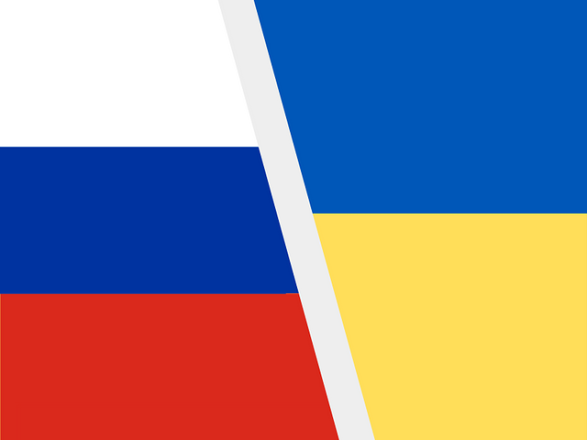
The latest round of peace negotiations between Russia and Ukraine is underway. After multiple unsuccessful attempts over the course of Trump’s first year in office, this plan appeared, almost out of nowhere, on 20 November. It's the result of a joint scheme by Trump’s son-in-law Jared Kushner, who had played some undefined role in the Gaza ceasefire agreement, and Trump’s special envoy to Russia Steve Witkoff.
The American team claims that the initial 28-point plan was drafted with the input of Rustem Umerov, the former Ukrainian Minister of Defence who is himself embroiled in a corruption scandal (see below). If that’s true, Umerov did a very poor job. The terms seem almost entirely to have come from the Russian side, where Kremlin bureaucrat Kirill Dmitriev proposed such measures as halving the Ukrainian army, writing into Ukraine’s constitution that it would never join NATO, and having Ukraine cede territory in all four of the oblasts that the front line passes through and Russia claims to control. This would go hand-in-hand with Steve Witkoff’s campaign to empty the White House of pro-Ukrainian diplomats.
There were some concessions to the Ukrainian side, but they were minimal. The line “Ukraine will have reliable security guarantees” is barely worth the paper it’s written on, given that it gives no concrete promises, and Ukraine supposedly had the guarantees of the Budapest memorandum in place when Russia invaded in 2022. The financial punishment Russia would receive for violating the ceasefire at a future date is small fry, and would be unlikely to seriously deter it. Some of the ‘help’ Ukraine was due to receive in aid included capitalist investment in Ukrainian industries in which America received 50% of all profits from the investment. In large part, this was a return to the politics of colonial conquer: two imperial powers were divvying up the winnings from a war-torn country, and then it was presented to the Ukrainians after the fact as a fait accompli.
This seemed to change over the ensuing weekend (22-23 Nov), as talks took place in Geneva. The Financial Times reported that it took 2 hours of fierce arguing over drafts being leaked to the press before any concrete proposals could be discussed, but once they were, the Ukrainian side report that the Americans took almost all of their points into account. The outcome was a new 19-point peace deal, in which much of the most sensitive topics (territory decisions, Ukraine’s security, NATO and Russia negotiations) had been ‘bracketed’ to be decided by each country’s president. In theory, Ukraine’s constitution requires that any changes in territory must be decided via a national referendum (and not during any period of martial law). Whether Zelensky keeps to this in practice remains to be seen, but protest on the ground may have to play a role in forcing him to keep to the country’s democratic norms.
Negotiations continue as this article is being written, and the exact content of the 19-point plan has not been published since the Geneva meeting. But assuming the bulk of the earlier plan remains, it will be a significant defeat for Ukraine. The financial stipulations alone will bind Ukraine into the worst version of post-war reconstruction, with the vultures of international capital picking at the bones of Ukrainian industry for scraps, while the working class bear the brunt of post-war financial depression and debt. Any freezing of the front line in its current state will resign millions of Ukrainians to living under the boot of their colonial ruler, where any trade union activity, civil society or public protest is crushed brutally, and a programme of enforced Russification is well underway, including strict language laws, the transportation of Ukrainian prisoners (and kidnapped children) into Russia, and the settling of Russian families in the homes of Ukrainians who have been forced to flee.
Russia’s Foreign Minister Sergey Lavrov suggested on Tuesday 25 November that Russia were not minded to accept the new 19-point deal. Putin has long insisted that any deal has to address the “root causes” of the war, by which he means the removal of Zelensky from office, and promises that Ukraine will not join NATO. This stems from his own specious reasoning as to why he “had” to invade Ukraine, but could easily tank the current peace offer and leave all sides in the same stalemate they were before. Russian missiles and drones continue to hit Ukrainian cities every night.
If push comes to shove in this, or a future, round of negotiations, Zelensky may not have much choice. If the US threatens to withdraw all support, then either Ukraine signs the paper or it is swiftly reduced to rubble via a Russian onslaught. In that circumstance, while we acknowledge the deal is a bad one, Workers’ Liberty would not outright condemn the Zelensky government for having signed it. It could be the best of a litany of bad choices.
This has come at a bad time for Zelensky. Members of his administration are still caught up in a corruption scandal that has taken hold of the country over the past couple of weeks. It has now emerged that the proposed changes to the anti-corruption bodies in July of this year were almost certainly an attempt by people in Zelensky’s circle to kill operation Midas, an enormous investigation into top-level corruption that has hit a number of the president’s very close allies. At time of writing, Rustem Umerov has gone to Turkey on ‘important business’ that he has not disclosed, and may be refusing to return (as his counterpart Oleksii Chernyshov, Minister for National Unity, did in July when served with a notice of suspicion of abuse of office). Tymur Mindich, former ally of oligarch Ihor Kolomoiskyi and friend of Zelensky, fled to Israel (where he has citizenship) and was sanctioned after his role in the corruption was revealed. The operation is ongoing and could well unveil more big names.
This underlines the significance of supporting not Ukraine’s corrupt government, but its struggling working class, in the ongoing war and peace deals. A post-war Ukraine constructed by Zelensky and his cronies will be a disaster for Ukrainian workers. Unions and socialists must be central to the fight for a worker-led reconstruction.
The European powers have come out in force against the initial plan, and statements from Macron and Starmer have insisted on Ukraine’s right to decide, at a minimum, questions of its own borders and army. This is little consolation once the deal is already on the table, given that the European governments have done woefully little to keep Ukraine alive. Should this deal collapse, or a future maximalist version of Russia’s plan be forced through and America drops all support for Ukraine, we should demand that the European countries take up the mantle and provide Ukraine the weapons needed to defend itself. They should also cancel Ukraine's foreign debt, to stop the country from being locked in to debilitating repayment schemes for generations.
Instead, the EU has spent the month of November removing multiple-entry visas, including Schengen visas, for Russian citizens. This has been one of the primary methods for Russian dissidents and those fleeing conscription to escape the country. It is an idiotic policy to attack this exit route, depriving Russians who oppose the war with a way out of the country, and ensuring that the Russian state can both hoover up any conscripts it wants, and stoke resentment about the treatment of ethnically Russian citizens of European countries, such as Estonia and Moldova. The policy is wrong both morally and tactically, and distracts from the only solution that socialists should be advocating: solidarity with the Ukrainian and Russian working classes opposing Putin’s invasion, and arming Ukraine to win the war.
Comments?We welcome replies, corrections and debate pieces. Contact us