
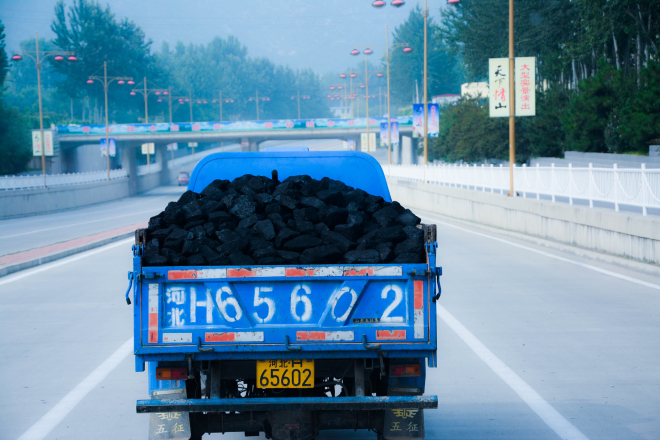
In 1990 China’s share of the world’s manufacturing output was 2.4%, in 2025 it hovers around 31%. China is the largest emitter of CO2, responsible for over 30% of global emissions. Since 1978 its GDP has grown just under 10% on average per year.
Who is celebrating China?
In much of the press on the Stalinised far-left China has been lauded for its green record. The Communist Review, journal for the CPB, has written how China is “at the forefront of the green energy revolution”. Aaron Bastani for Novara Media writes “the debate in the West about whether China is a climate leader or not can be decisively answered in the affirmative”. Grace Blakely, staff writer for the Tribune, claims “in China, the state is pushing for decarbonisation”.
Recently, the bourgeois press and reputable environmental think-tanks have also given China accolades for its green record. Some authors in Carbon Briefing argue that coal power in China is becoming “residual”. Clean energy think tank, Ember, says that “China is the engine” driving an uptake in renewables across the world and that its fossil fuel consumption is “poised to peak and begin falling, triggering a global decline“.
What is there to celebrate?
China has lower per capita emissions than the USA, Canada or Australia. In proportion to population China is responsible for fewer cumulative emissions than the US.
This year China met its energy demand growth through renewables alone and even cut its fossil fuel use slightly in the process. Back in 2021 China pledged also to end financing of overseas coal plants.
China leads the world in producing green technology. It has installed more solar panels in one year than any other nation has built in total. Moreover, its massive and cheap production of green technology means that many countries are taking up these technologies more readily. China supplies 80% of solar panels and 60% of wind turbines worldwide.
Chinese electric cars make up 60% of world sales and this market is growing as China seeks to increase exports. Domestically, new electric vehicles have been undercutting Chinese petrol consumption.
When it comes to transport, the proportion of electric buses in China grew from 16% in 2016 to 77% in 2022. High speed rail (HSR) infrastructure in China surpasses most countries, though it started only in 2008. China’s HSR network covers over 50,000km and is two-thirds of the world’s HSR capacity. The numbers of passengers on HSR have increased by 30% year-on-year since 2008. The introduction of HSRs in China on certain routes has resulted in sharp declines on some domestic aviation routes, as much as 45% between Wuhan and Guangzhou.
Not only is China leading the world in renewables, it has managed to increase forest coverage domestically since 1978. Between then and now, China’s forest coverage has grown from 12% to around 23%. As NASA reported “The world is literally a greener place than it was 20 years ago… a counterintuitive source for much of this new foliage: China and India.”
China continues to be the chimney of the world
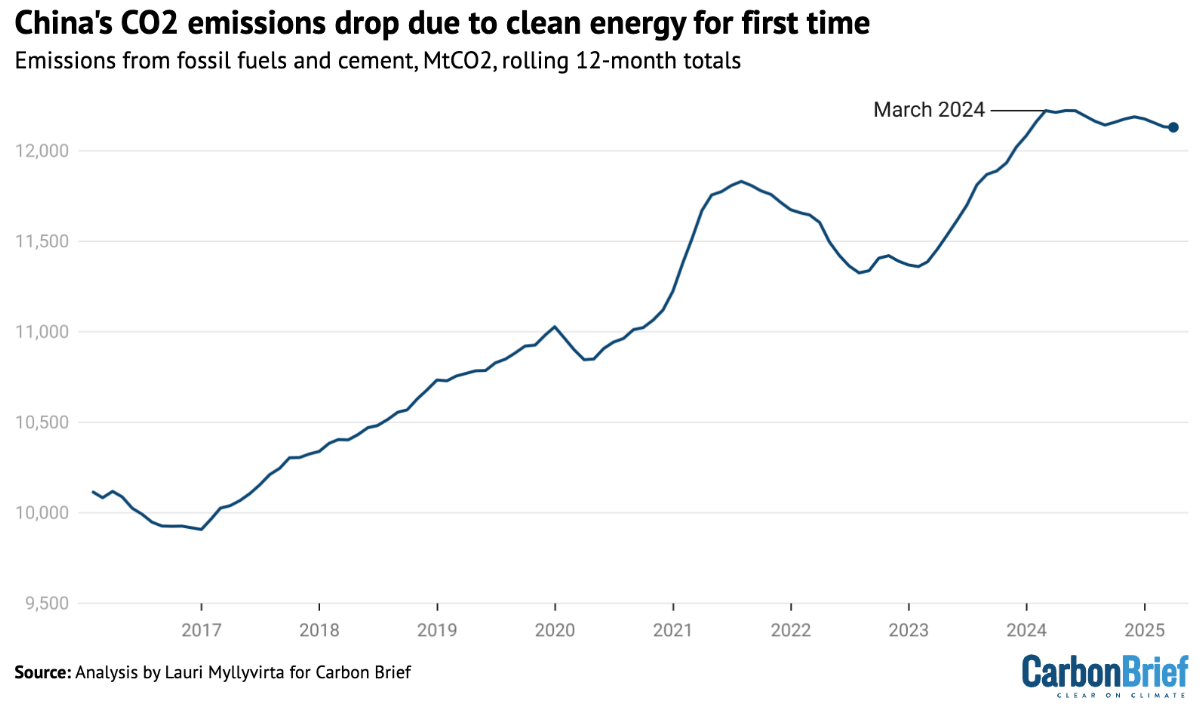
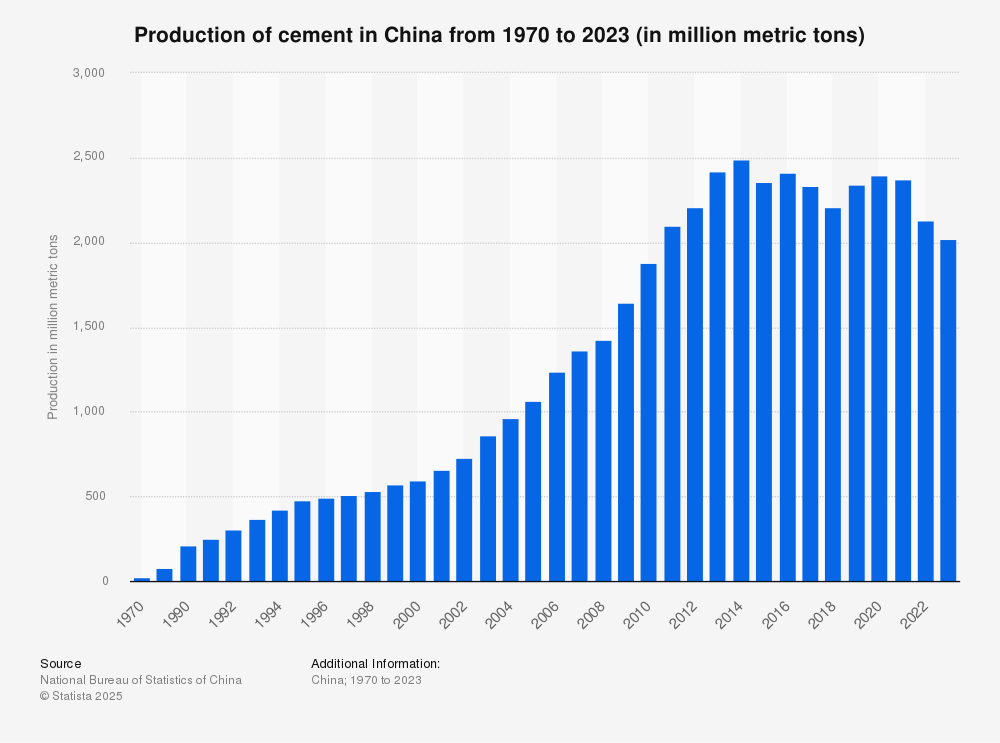
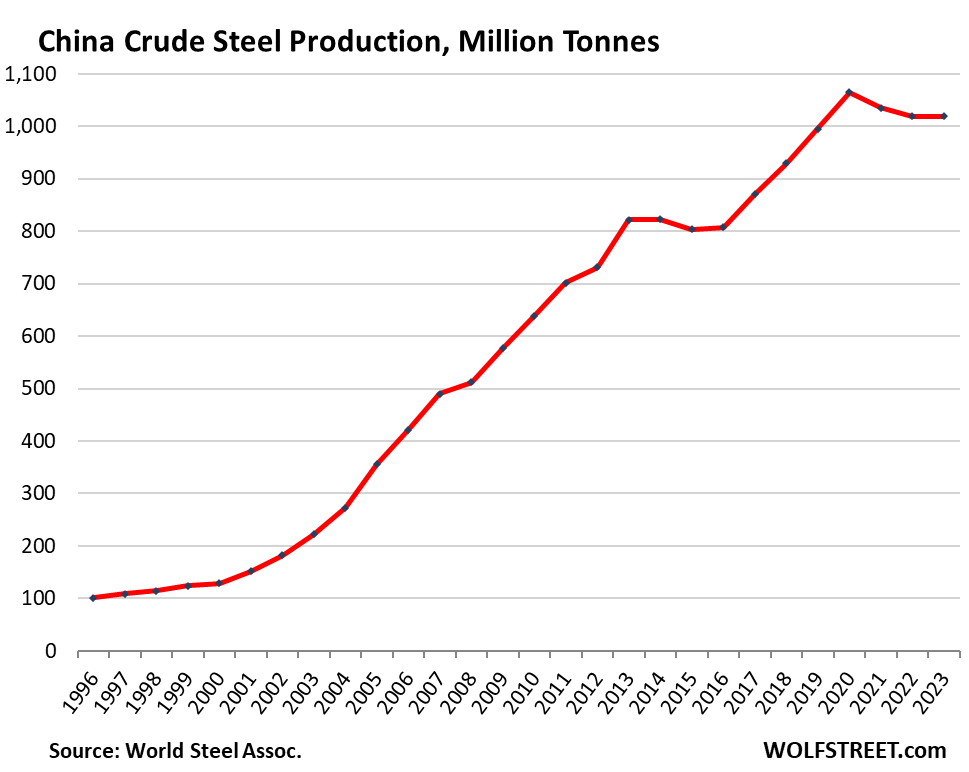
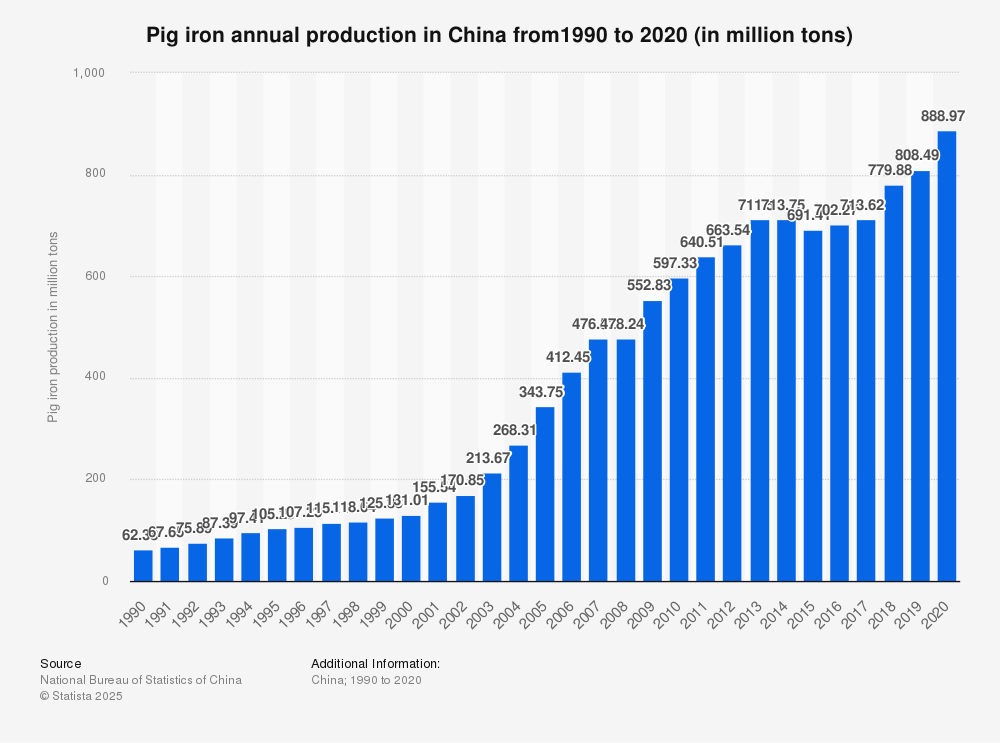
It’s an impressive picture. However, on closer inspection, it obscures much. The recent levelling of emissions probably owes more to China's construction business cycle - volume now levelling off, after huge over-building - than to "green" effort to reduce high-emission industry. Since 1978 China come to mass-produce virtually everything - renewable energy equipment, and high-emissions output too. What are the internal dynamics that drive this massive production? Along the way, the Chinese economy has inflicted environmental destruction on China itself and the wider world.
China has fewer per capita emissions than the USA, Russia, Saudi Arabia, and Qatar. However, statistics about per capita emissions often skew up countries with smaller populations - Palau, Trinidad and Tobago, and Luxemburg are higher up the list than Germany, France, or Iran.
China pumps out more CO2 than the next five largest emitters combined (USA, India, Japan, Russia, and Germany). However, China’s population is two-thirds the combined population of those countries and its GDP is 32% of their combined GDPs. If anything China and its economic model is anomalous for producing so many emissions compared to the size of its population and GDP.
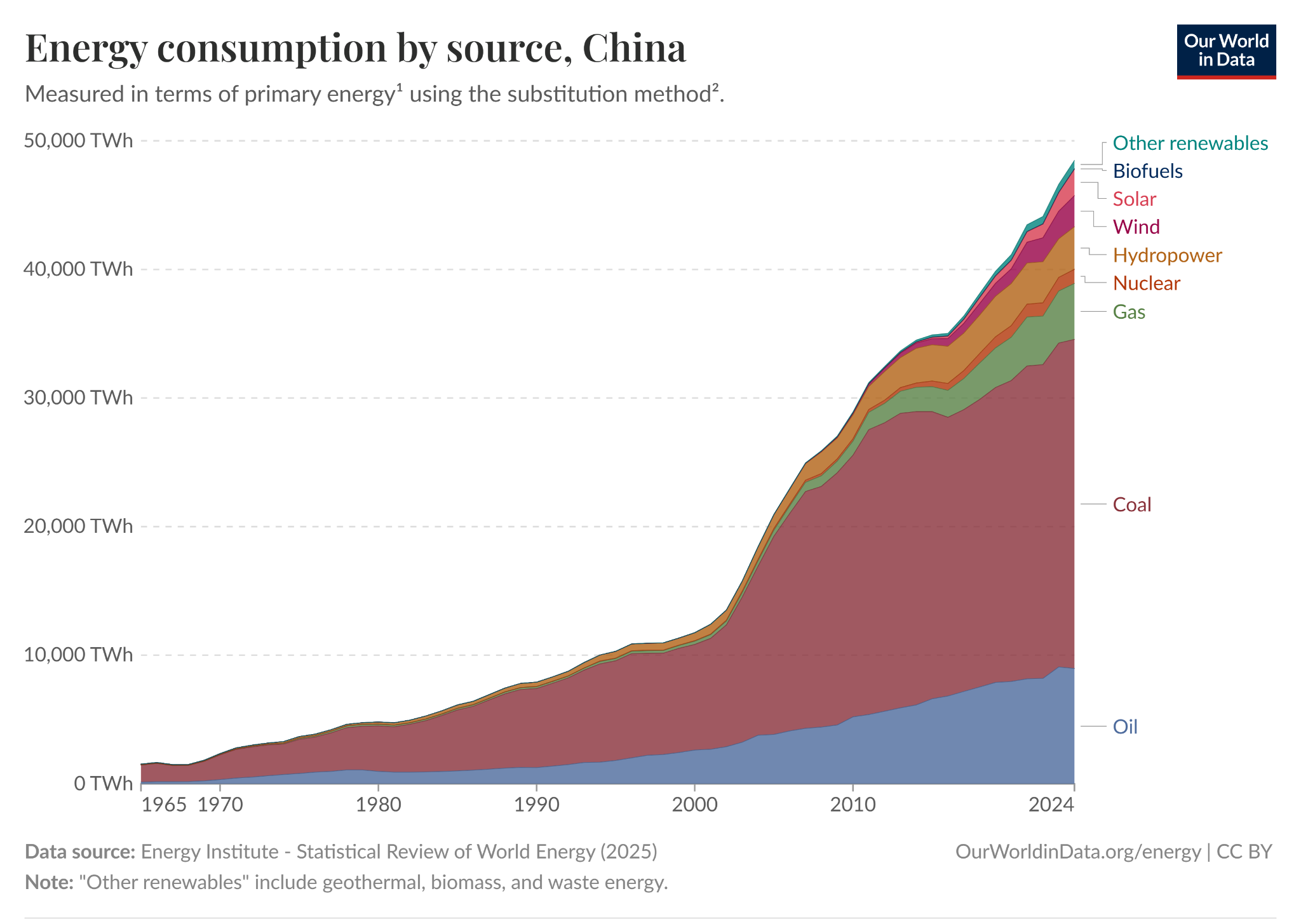
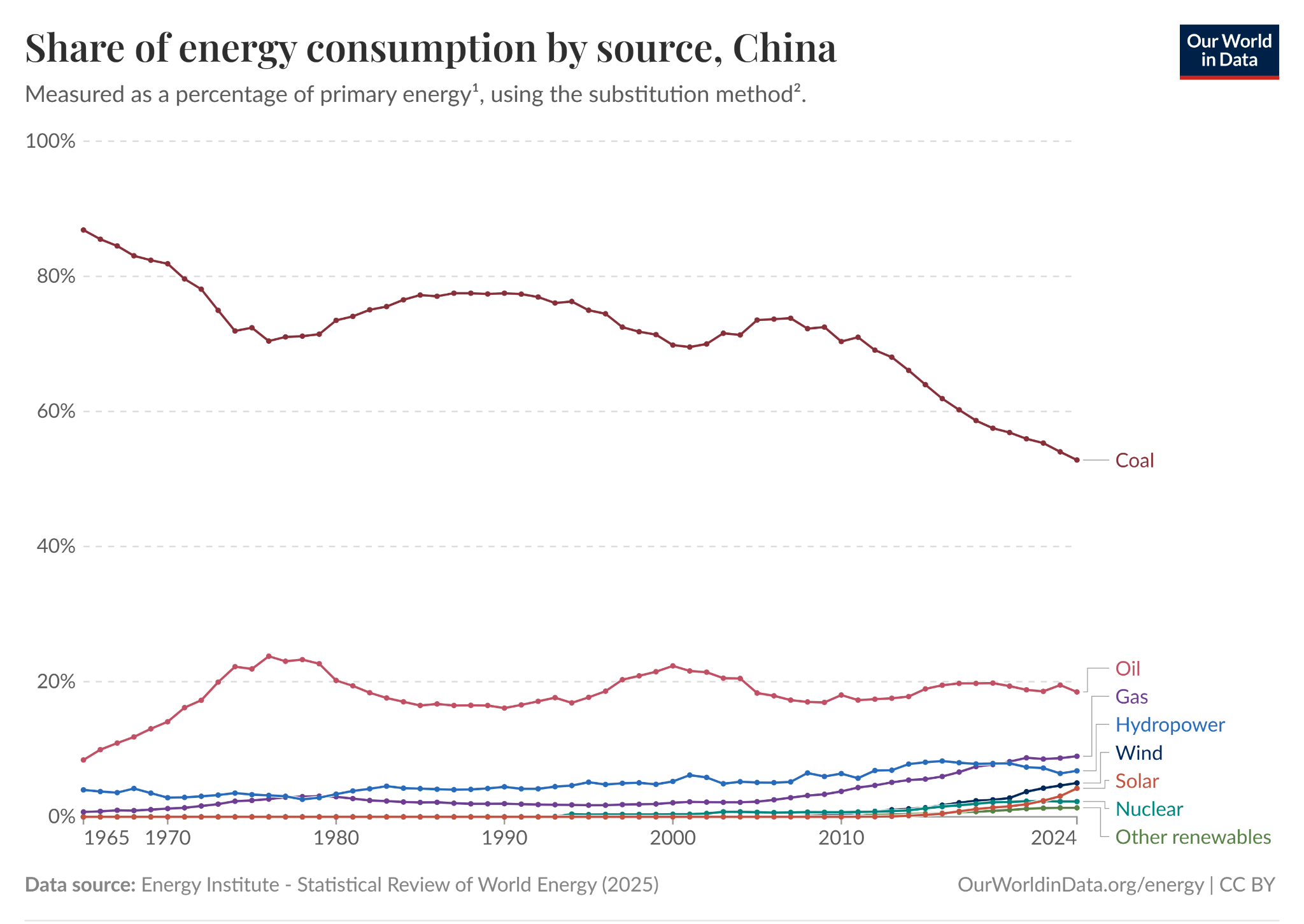
The proportion of China’s energy consumption from coal has fallen from its peak of 78% in 1990 to just over 53% in 2024. In that same time, the share of energy consumption from renewables and nuclear has grown from 4.5% to 20%. But overall energy consumption has skyrocketed in this time. So renewables and nuclear have increased but so have fossil-fuels. From 1990 to 2024 energy consumption from coal has grown from 6100 TWh to 25600 TWh; oil from 1300 TWh to 9000 TWh; and gas from 200 TWh to 4300 TWh.
China has been making promises to reduce fossil fuel consumption since 2016, but has continued to fall short of them. Its self-imposed target of peak emissions by 2030 is really just a promise to ramp up fossil fuel consumption until 2030 - the first half of this year notwithstanding this is exactly what has happened. President Xi Jinping has promised that China would reduce GHG emissions by 7-10% by 2035. This more specific target falls far short of what needs to be done to meet international climate goals - as Lauri Myllyvirta, lead analyst at the Centre for Research on Energy and Clean Air, has said “anything less than 30% is definitely not aligned with 1.5 degrees”.
Chinese Fossil Fuels Expand
China still approved a raft of new coal mines and resumed suspended projects from 2024. This is the highest level of coal plant construction in China in the last 10 years. The construction of new coal plants has only increased since 2021. In 2024, China accounted for 93% of the world's new coal constructions.
China plans to expand its oil and gas use. This year it made major breakthroughs in gas and oil exploration. Besides plans to expand domestic oil and gas production, China is the third largest importer of oil and gas and is now following through on proposals for a gas import pipeline from Russia through Kazakhstan.
To make matters worse China is also home to the biggest carbon-intensive industries of cement, iron and steel production - these industries account for 47% of China's emissions. Transitioning to renewable energy for electricity generation is considerably easier than in these industries. Currently there is no technology or fix to make cement, iron, and steel production without large amounts of coal.
As Richard Smith, a US writer on China and on ecology, puts it: “far from ‘transitioning to a green and low carbon mode of development’, ultra-authoritarian Xi Jinping is developing the most carbon-intensive large industrial economy in the world.”
Rail capacity
The explosive growth in high-speed rail capacity in China should be seen in the context of China’s unique capacity to massively overconstruct even by traditional capitalist standards. In 1990, China had 5.5 million motor vehicles. In 2025 it now stands at 453 million. Where there were many thousands of commuters on bikes, now there are massive ring-roads, multilane motorways, and world-historic traffic jams. The automobilisation of China was a political and economic choice, chosen instead of a more sustainable combination of buses, trains and bicycles in cities.
HSR and underground systems grew massively from the 2000s in China. But this construction came after the car-centred infrastructure had become established. A lot of this construction has come from local party officials’ desire to boost their particular provinces and cities. Opulent train stations and rail infrastructure have been built in rural towns where the stations largely lie empty and the trains run infrequently since only a couple of dozen people use them.
Afforestation at home, deforestation globally
China’s afforestation is indeed impressive and has gone some way to see off increased desertification. At the same time China’s overproduction and nearly non-existent enforcement of existing health and safety and environmental law, coupled with widespread corruption, mean in most cities clean drinking water is still an issue, acid rain is a not uncommon occurrence, and land and air have become massively polluted.
While China expands its forests at home, it has been driving deforestation worldwide. More than half of timber shipped globally is destined for China and China leads the way in driving the illegal logging industry. Moreover, China leads the world in poaching and illegal wildlife trade. In 2018, China reversed a 25 year ban on trading rhino horn and tiger bones. Demand for exotic fauna has also increased as the Chinese state expands “traditional medicine”, pushed as part of wider Han Chinese ethno-nationalist project.
All of the Above
China is expanding renewables. But it is expanding on all fronts - coal power construction, oil and gas production and exploration, gas imports, and renewable energies. Growing renewables does not decarbonise if they simply go on top of an expanding assortment of oil, gas, and coal consumption. It is surprising to see authors of the left recognising this in capitalist economies of the West, but regarding China as somehow exceptional.
China's political economy comprises a mix of state run companies, foreign-ventures, and private enterprises. The state-owned companies are run by China’s ruling elite under five-year plans. A mix of CCP nationalism, employment maximisation, consumer maximisation, intra-bureaucratic competition, corruption and the country’s integration into the capitalist world economy have driven China to produce en masse on all fronts.
China has built whole HSR lines and stations that are effectively unutilised. Not only this but whole skyscrapers, subway stations, airports, districts of cities, and even whole cities (so called “ghost cities”) have been constructed that are completely empty and unutilised.
China has rapidly expanded renewable energies to dominate the market and out of national security and domestic energy security concerns. China and the USA are currently competing for who will dominate the future global energy markets - the USA under Trump is pushing for more oil and gas, China (out of its own national security and imperial motivations) is attempting to dominate the market in renewables.
Ember or Carbon Briefing might be right that China’s emissions will peak and decline and it will continue to drive down the price of renewables. This doesn’t qualify China as an economic model for decarbonisation. We could make a similar and possibly much better argument for the US and EU - there, emissions have reduced over time since 2005. Green technology has become exponentially cheaper since the 1970s in the West, too. Yet, rightly, we do not hold up the capitalism of Western states as a model for decarbonising our world nor take their leaders' pledges at their word. Capitalism has been unique for its capacity to overproduce commodities on all fronts, and regardless of ecological consequences. China’s political economy outdoes even traditional capitalist states in this regard.
Where next?
Climate change and other environmental issues are a consequence of a global interconnected system run on capitalist terms. While emissions from China have expanded and are the biggest of any one country, they are also a result of China producing for the rest of the world - and Western capitalists "de-industrialising" and off-shoring polluting industries.
Climate change needs to be tackled as a global issue. Lauding particular countries as “climate leaders” or finger-pointing at other ones as villains often obscures rather than clarifies the global economic and political relations that drive the climate crisis.
Workers’ Liberty calls for a worker-led just transition to halt runaway eco-destruction as soon and as quickly as possible. China is a repressive and authoritarian police state. It runs a semi-militarised labour regime ranging from semi-coerced 8-16 hour days in factories like Foxconn to forced labour carried out by Uyghurs in Xinjiang province. China leads the world in executions, with at least a couple of thousand a year, more than the whole world combined. However, the actual figures are unknown and currently guarded as state secrets.
China has seen labour activity and strikes, including in strategic industries, but independent trade unions and workers' organisations are banned in China.
As socialists and internationalists we seek to make links with the Chinese working-class and progressive climate activists in China. Through them we can fight for a worker-led just transition in China in opposition to the capitalist and bureaucratic-collectivist Chinese state.

Comments?We welcome replies, corrections and debate pieces. Contact us