
Pic: Wall Street Mojo
Karl Marx opened Capital volume one with the words: "The wealth of those societies in which the capitalist mode of production prevails, presents itself as 'an immense accumulation of commodities', its unit being a single commodity".
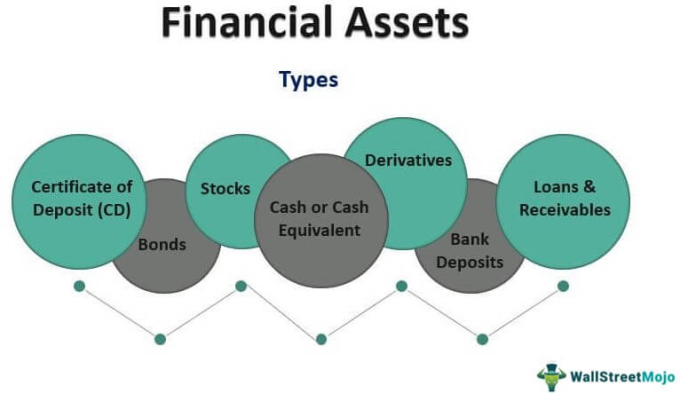
But Marx himself was aware that this is only a first approximation, and, as things have developed, the wealth of the wealthy is more and more not just houses, yachts, private jets, cars, etc., but paper wealth, shares, bonds, and other financial assets which are in essence "tickets" to future surplus-value. A sizeable part of it is government bonds, paper wealth giving title to interest payments from the state, now running at over £100 billion a year in the UK. Marx wrote:
In so far as we have hitherto considered the peculiar form of accumulation of money-capital and of money wealth in general, it has resolved itself into an accumulation of claims of ownership upon labour. The accumulation of the capital of the national debt has been revealed to mean merely an increase in a class of state creditors, who have the privilege of a firm claim upon a certain portion of the tax revenue.
By means of these facts, whereby even an accumulation of debts may appear as an accumulation of capital, the height of distortion taking place in the credit system becomes apparent. These promissory notes, which are issued for the originally loaned capital long since spent, these paper duplicates of consumed capital, serve for their owners as capital to the extent that they are saleable commodities and may, therefore, be reconverted into capital.
Titles of ownership to public works, railways, mines, etc., are indeed, as we have also seen, titles to real capital. But they do not place this capital at one's disposal. It is not subject to withdrawal. They merely convey legal claims to a portion of the surplus-value to be produced by it. But these titles likewise become paper duplicates of the real capital; it is as though a bill of lading were to acquire a value separate from the cargo, both concomitantly and simultaneously with it. They come to nominally represent non-existent capital. For the real capital exists side by side with them and does not change hands as a result of the transfer of these duplicates from one person to another.
They assume the form of interest-bearing capital, not only because they guarantee a certain income, but also because, through their sale, their repayment as capital-values can be obtained. To the extent that the accumulation of this paper expresses the accumulation of railways, mines, steamships, etc., to that extent does it express the extension of the actual reproduction process — just as the extension of, for example, a tax list on movable property indicates the expansion of this property. But as duplicates which are themselves objects of transactions as commodities, and thus able to circulate as capital-values, they are illusory, and their value may fall or rise quite independently of the movement of value of the real capital for which they are titles.
Their value, that is, their quotation on the Stock Exchange, necessarily has a tendency to rise with a fall in the rate of interest — in so far as this fall, independent of the characteristic movements of money-capital, is due merely to the tendency for the rate of profit to fall. [Marx, like almost all other economists of his day, believed that the general ratio of surplus-value to capital-stock would fall over time. Interest rates did drift down in the 19th century, but generally are not lower than in Marx's day, and in some recent periods have been higher]. Therefore, this imaginary wealth expands...
Gain and loss through fluctuations in the price of these titles of ownership, and their centralisation in the hands of railway kings, etc., become, by their very nature, more and more a matter of gamble, which appears to take the place of labour as the original method of acquiring capital wealth and also replaces naked force. This type of imaginary money wealth not only constitutes a very considerable part of the money wealth of private people, but also of banker’s capital, as we have already indicated...
As the financial system develops, and becomes more convoluted, the accumulation of loanable money capital – though fundamentally it is an offshoot of real accumulation – tends to increase disproportionately.
Money is by no means just an intermediary in transactions over real goods and services. At any time they are large pools of money in the hands of the capitalist class, stashed in banks; and much of that money is used in transactions over titles to future surplus-value, not in current real transactions.
Elsewhere Marx explains: "There must be a continuous plethora of money-capital in definite phases of the cycle and this plethora must develop with the expansion of credit”.
Bankers, and other financiers, thus become central. “The control over this capital falls completely into the hands of the banker in his capacity as middleman… The banker appears in the role of a supreme benefactor”.
Marx suggests that the “financialisation” often described as developing since the late 1970s is the default organic tendency of capital. The question for economic history then becomes how and why “financialisation” was suppressed between the 1930s and the 1970s.
The “plethora of money capital” is normal, but also drives towards crisis. “Simultaneously with it, the necessity of driving the production process beyond its capitalistic limits must also develop: overtrade, overproduction, and excessive credit”.
Marx hints towards the sort of analysis of capitalist finance later sketched by Hyman Minsky. According to Minsky, in capitalist prosperity an increasing proportion of units in the financial markets shift from “hedge” to “speculative” to “ponzi” positions. A “hedge” unit can cover interest and principal payments due from current cash flows. A “speculative” can cover interest payments from cash flow, but depends on new borrowing to repay principal. A “ponzi” unit depends on an increasing value of the financial paper it has borrowed even to cover its interest payments. Eventually there are so many "ponzi" units that the expansion of credit implodes.
As finance expands, the rich gain control of others’ savings and profit from them. It is the workers and poor who really scrimp and save, but often lose their savings. “The last illusion of the capitalist system, that capital is the fruit of one’s own labour and savings, is thereby destroyed.”
The financiers cluster. “Great concentrated money-markets are created, such as London, which are at the same time the main seats of trade in this paper. The bankers place huge quantities of the public’s money-capital at the disposal of this unsavoury crowd of dealers, and thus this brood of gamblers multiplies”.
Marx describes bank deposits as “claims to money” as distinct from money. “Prima facie loan capital always exists in the form of money, later as a claim to money, since the money in which it originally exists is now in the hands of the borrower in actual money-form. For the lender it has been transformed into a claim to money, into a title of ownership”.
Modern monetary statistics consider the “monetary base” to include only notes and coin outside the central bank plus commercial banks’ deposits with the central bank. They track “broader money” as a more significant indicator of liquidity in the economy, and always include demand-deposits in that “broader money” measure; but usages differ from country to country in how much beyond demand-deposits is included in “broader money”.
The mention of “claims to money” points to the need to clarify the dividing lines along the spectrum from money to “near-money” to less reliable financial paper. (In a sense every commodity, and every piece of financial paper, is a “claim to money”. The term “near-money”, which is a loose one, apparently dates only from 1942).
But Marx considers the hegemony of finance to be organic: “The value of commodities is sacrificed for the purpose of safeguarding the fantastic and independent existence of this value in money… For a few millions in money, many millions in commodities must therefore be sacrificed. This is inevitable under capitalist production and constitutes one of its beauties”.
Comments?We welcome replies, corrections and debate pieces. Contact us