
Paul Hampton’s thorough survey (Solidarity 752; bit.ly/mr-ph) of the long-running US left magazine Monthly Review, of which John Bellamy Foster has been the main editor since 2000, is very useful as a comprehensive and critical account of an influential and well-known school of thought.
It is an edited version of a contribution in a long-running debate in Workers’ Liberty about how to evaluate the political and theoretical contribution of the discourse which centres the terms “metabolic rift” or “metabolism”. Foster and his associates have been the most prolific in that discourse, and Foster himself was the pioneer of the specific idea that the term “metabolic rift” can be made the axis of a “Marxist ecology”.
The editorial team of Solidarity asked for the edited version of the article because we thought the critical survey of Monthly Review and Foster valuable whatever one’s views on “the metabolism debate” in ecology. Obviously, however, there is spillover, and thus this short indication from one of us who thinks that the “metabolic rift” framework, or metaphor, or terminology, or whatever, is too vague to help us much, but does not “blame” it for Monthly Review’s and Foster’s politics. Readers can survey the whole debate here.
For myself, I do not blame the politics which Foster had long before he started writing about “metabolic rift” on his use of that language. Rather, I would say that the ability of Foster and others, in a long series of books, to dovetail that terminology (or framework, or metaphor, or analogy, or whatever) into Monthly-Review political conclusions demonstrates that it has not had power to improve politics.
Others have dovetailed that language into different conclusions.
Kohei Saito dovetails it into a Popular Front to win degrowth.
Andreas Malm dovetails it into a wild variety of conclusions.
Paul Hampton has dovetailed it into political conclusions which I agree with.
I take that as evidence that the language, or framework, or metaphor, is not precise enough to lead to political conclusions.
Alfred Schmidt used the term Stoffwechsel (and his translator rendered it as metabolism, which by that time was the dictionary translation), in a 1962 book on philosophy. Neil Smith used the term metabolism in a 1984 book on geography. Both books are valuable in their fields. Neither drew any very special ecological-politics conclusions.
Marx used the word Stoffwechsel, fairly unusual in his day. It is a compound noun made up by combining two very “ordinary” German words (Stoff – substance, material, matter, stuff – and Wechsel – change, exchange, etc.). English has compound nouns like that (steamship, basketball, etc.), but German develops more of them. Marx could thus be sure that a German reader who had not seen the word before would understand the gist: material exchange.
Better-read readers would get a bit more, because the compound noun had been put into circulation before Marx by well-known German scientists such as Liebig and Moleschott. With them it surely had its baseline meaning of material exchange, but also had an added connotation of circulation – a cycle or spiral of interactions, rather than just a one-off. A famous 1852 book by Moleschott was titled The Circuit [Kreislauf] of Life.
Stoffwechsel
Over the 20th century, the word Stoffwechsel became much more common, but also narrowed in everyday usage. German readers will now be introduced to it in school science, where it means the chemical reactions within living cells (plant and animal). Metabolism is a word which gained currency in English from the late 19th century, from a Greek root meaning simply “change”. Over time it became the standard “dictionary” translation of Stoffwechsel (as it was not when Engels supervised the first English translation of Capital volume 1). Like Stoffwechsel, it has become a term everyone learns in school, but at the same time narrowed in its usual connotation.
The word metabolism is also used these days in looser or analogical senses, as in “industrial metabolism”. That’s all right, too, as long as writers explain what meaning (different from the usual school-science one) they are using.
In the German text of his completed Capital volume 1, Marx used Stoffwechsel repeatedly, but mostly in reference to the market circulation of commodities. Seeing that circulation as a “spiral” process in time – rather than being about instantaneous equivalence, as in the neoclassical model of “the Walrasian auctioneer” – was important, I think, for Marx’s refutation of “Say’s Law” and his description of capital as value-in-process rather than a thing.
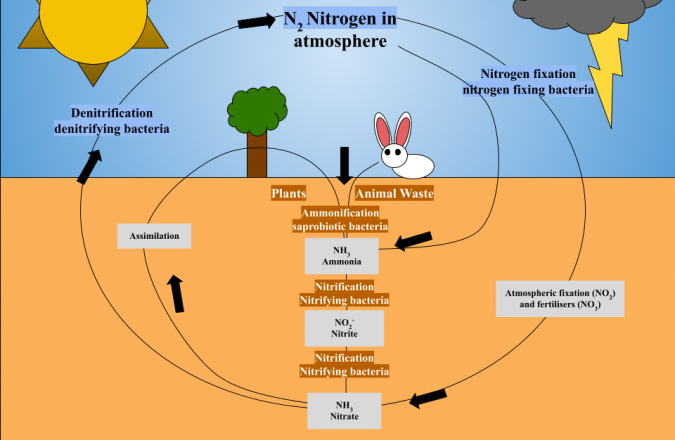
Marx’s usage of Stoffwechsel for interactions between human society and the rest of nature shows he latched on early to the importance of what since the 1960s, at least, have come to be called (and analysed in detail as) “biogeochemical cycles”. That is of interest, but the study of biogeochemical cycles is of course not distinctively “Marxist”, and I remained to be convinced that referring to those cycles as “metabolism” adds special insight. I also remain to be convinced that translating Marx’s use in this context of the very ordinary German word Riss (rip, tear, break, etc.) as “rift” rather than “break” adds anything special.
In his study of Monthly Review and Foster, Paul Hampton credits Foster with developing a “metabolic” approach into three propositions, roughly:
• Labour as the mediator between human society and the rest of nature
• A crisis in that interaction
• Socialism as the way to restore a better interaction.
Paul introduced the whole approach to readers of Solidarity in a long series of reviews of books by Foster and his co-authors. Those reviews were never uncritical, but they started by telling us: “Foster’s work has been central to the revival of interest in Marx’s ecology. He is responsible for developing the metabolic rift expression, taken from Marx”.
In broad terms, I would agree with the three propositions. (Whether they depend on this or that use of the word “metabolism” is another matter). My worry is that I read them as too imprecise to be the foundation of a theory, and as sometimes even formulated in ways that may mislead. I’ve explained that worry in the articles which interested readers can find in our eco discussion bulletins.
The whole debate has shown one thing at least, namely, that the word “metabolism” is used in a number of different ways today in ecological debate. And the usages are always different again from the most widespread usage, which we learn in school science, and which is different yet again from the meaning and connotations of “Stoffwechsel” in the mid 19th century.
I can understand that comrades may find the word useful when writing about ecology. But the best way to go forward would be to discuss issues like aviation and agriculture, and dispute about “metabolism” when contributions on those issues introduce it substantively.
In discussing those issues, I’ve not found it necessary or helpful to use the word “metabolism”. Maybe other comrades can show that introducing the word, in one usage or another, can improve or refute the argument.
Comments?We welcome replies, corrections and debate pieces. Contact us