
Pic: WHO
The interview with Dr Asad Khan on long Covid (Solidarity 747-748) highlights the contribution to the growth in mental ill-health of widespread long Covid, which affects hundreds of millions of individuals worldwide and maybe two million in the UK.
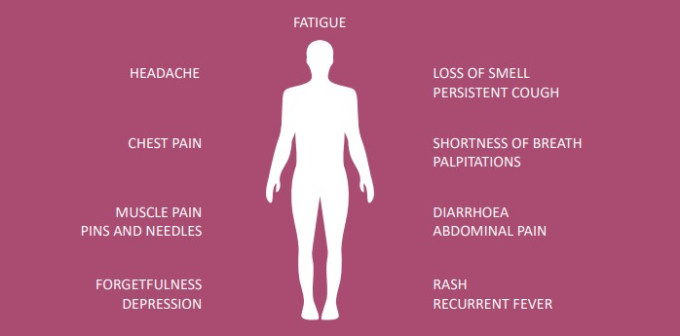
A great and sudden reduction in ability to socialise, exercise, get out of the house, work, or pursue hobbies would depress most people; as would symptoms from daily nausea to debilitating fatigue, from ongoing loss of taste or smell to muscle- or headaches. Uncertainty about when or whether you might recover and get (some of) your old life back — and how to manage the condition and the treatment — would increase almost anyone’s anxiety. Stigma, lack of sympathy, and reduced incomes for long Covid sufferers are not rare, and emotionally challenging.
On top of this, some evidence suggests that for many serotonin may be reduced as a direct impact, with consequent lower mood and increased anxiety; alongside other neurological symptoms like cognitive dysfunction or “brain fog”.
Other factors
However, other factors beyond experiencing long Covid have likely also contributed to increasing anxiety and depression across society, I believe. Having loved ones dying or being disabled by Covid impacted many. And fear about a scary new disease — or of sudden serious societal change — often compounded other anxieties.
The two lockdowns were, as Dr Khan said, “brief”, at least in comparison to the isolation, semi-lockdown, and other suffering that many with long Covid experience. But lockdowns, alongside wider and longer-lasting social distancing, surely harmed some people’s mental health — even if they were, overall, necessary for limiting infection. Adjustments to the new pandemic accelerated longer-term trends of atomisation and reduced in-person interaction. Pandemic mitigation measures particularly impacted young people beyond the two or three years in question.
As social distancing and lockdowns receded, society was hit by post-pandemic inflation while many workers' wages fell far behind the cost of living. Austerity, and austerity-lite have compounded the impacts of this. Valiant strikes for the most part lost or had only limited victories, as workers were sold out by union leaderships. The NHS has taken a hammering. Brexit hasn’t helped. We can both recognise widespread mental health harms from often unrecognised long Covid, and from many other factors.
Denialism
Denialism about long Covid is due to medical misogyny, to underreporting, to insufficient understanding. Additionally, it is promoted by sections of the right. Sections who were sceptical about Covid, its severity, and about lockdowns or social-distancing seek to dismiss inconvenient facts; others seek to dismiss sufferers as “benefit scroungers”. This is harmful and offensive for obvious reasons.
Misdiagnosing most long Covid as “psychological” is dangerous in an additional way. Long Covid often involves or causes Postural orthostatic tachycardia syndrome (POTS)1 and/or Chronic fatigue syndrome (CFS)2 (and often anxiety or depression too). If you have a psychological condition, it isn't less "real" or debilitating: but the treatment is very different. More exercise, social activity, getting out of the house, and other such “exertions” often help you if you suffer from anxiety or depression alone. But with CFS and similar, that’s generally harmful: it will often exacerbate your symptoms in the short term, and harm your recovery in the longer term. Where long Covid involves POTS or other autonomic dysfunction (but not CFS), navigating exercise and exertion is problematic and complicated too, though slightly different. “Pacing”, consistently and often severely reducing daily activities to limit post-exertional symptom exacerbation, is often both necessary and incredibly challenging.
Understanding PASC/long Covid
In my view, “Long Covid” isn’t the best term, but it is currently the dominant one. "Post-acute sequelae of COVID-19" (PASC), “post-Covid conditions”, or “long Covid” are really umbrella terms for a variety of conditions, encompassing probably hundreds of symptoms, often found in distinct clusters. Underlying these clusters of symptoms are very likely multiple distinct, though far from mutually exclusive, mechanisms.
The risk factors for individuals developing PASC (long Covid) after infection are not the same as those for individuals being hospitalised or dying with an acute Covid infection. Acute infection disproportionately kills older individuals and men; PASC (long Covid) more often hits younger to middle aged people, disproportionately women. There is much still to be learned about other risk factors.
Vaccination (and boosters) significantly reduces the risk of developing long Covid (or its severity), as well as of hospitalisation or death with acute Covid. (Edit in summer 2026: When originally published, this article referred to antiviral cocktails such as Paxlovid. Unfortunately, as of a year later, while the evidence of Paxlovid's ability to dramatically reduce hospitalisation and death remains strong, the evidence of its ability to reduce the risk of developing long Covid is less clear.) But significant risk remains. Nor does having weathered a previous bout of Covid with no lingering after-effects mean individuals are safe from PASC/long Covid following future infections.
Treatments
Dr Asad Khan points out the complete inadequacy and sometimes absence of long Covid support on the NHS, even before most long Covid services were decommissioned. The tests that anyone who has suspected PASC/long Covid is (or should be) given by their GP are indispensable, not just to prescribe long Covid treatments, but to rule out further complications or other co-occurrent or similarly presenting conditions.
But Dr Khan is also correct to point out that potential treatments with a relatively weak evidence base or understanding as of yet are often not prescribed or recommended. Individuals already juggling the extra costs of living with PASC/long Covid, and often with reduced incomes, frequently seek private healthcare where they can afford it to get what treatment they can.
But the vacuum left by as-yet weak evidence and scant public provision also attracts all sorts of pseudoscientific sharks, exploiting desperate people with questionable “treatments”.
There are some evidence-based treatments for many symptoms (check out for example this website or this paper; or a more dated BMJ article; or maybe best practice recommendations, or perhaps this book). Many or most who develop long Covid can eventually recover, partially or completely.
Additional treatments, without high-quality evidence, should neither be ignored nor handed out willy-nilly. A serious well-funded research programme must be integrated into re-expanded long Covid services. Purported or weakly evidenced treatments should be offered to all interested sufferers, via clinical trials: and become better evidenced, discarded, or otherwise refined.
1 POTS sufferers get a huge and prolonged increase of heartrate from standing up, and a variety of debilitating associated symptoms. It is thought to be caused by autonomic dysfunction, where the autonomic nervous system — which regulates breathing and heartrate among other things — is not functioning properly. It has only been recognised relatively recently, and many of the symptoms overlap with CFS. It can be difficult diagnostically to distinguish one from the other, plus they often comorbid. POTS often involves Post-exertional symptom exacerbation (PESE, also known as Post-exertional malaise, PEM).
2 Whether this very large subset of PASC sufferers have CFS, a specific type of CFS, or something that just strongly resembles CFS is I think debated. CFS used to be called Myalgic encephalomyelitis (ME), and often called ME/CFS. Many or most non-long Covid ME/CFS sufferers developed it following a different viral infection. Much evidence points to, and many experts believe, that CFS, and this subset of PASC, is linked to a damaging of how energy is processed (at least for many patients). Likely mitochondrial dysfunction, impacting the Krebs cycle and ATP production; possibly oxygen transport.
PESE/PEM — very common in long Covid — is the hallmark symptom of ME/CFS, though it is also present in fibromyalgia (which is characterised by chronic pain), and POTS.
ME/CFS, which also disproportionately impacts women, has historically been dismissed and underresearched, and remains poorly understood. Widespread and well-documented long Covid has shone a light on ME/CFS and increased recognition. Long Covid research has and could further help those suffering from non-Covid-induced ME/CFS.
Comments?We welcome replies, corrections and debate pieces. Contact us