
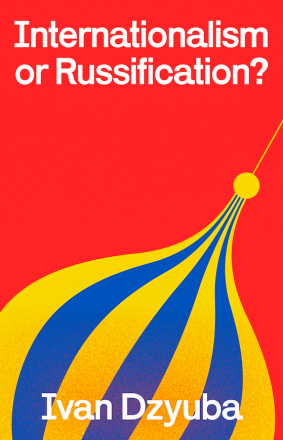
Ukraine’s national struggle is no recent or “proxy” concoction. Previous articles in Solidarity have covered the Holodomor, the Stalin-made famine that killed millions in 1932-33. Ukrainian national and socialist revolt surged in the 1970s. From Workers’ Fight (a forerunner of Solidarity), 6 July 1974.
In 1946, a lyrical poem about the beauties of nature was condemned by Stalin’s literary censors as “bourgeois nationalism” and forbidden publication. If the poem had been set in Russia, it would no doubt have received approval and official accolades for being cheerful and positive. But the poet happened to be Ukrainian.
The incident is typical of thousands that can be related from the time of Stalin. But, while the literary censorship is now not so crude as in the 1940s, the oppression of Ukraine is, if anything, worse.
Ukraine is a pretty big place — five times the size of England, and with a population of some 50 million. But for only 15 years of its recent history has it been able to foster its own national and cultural heritage. Between domination by the Tsarist “prison house of nations” and the Russian Stalinist bureaucracy, Ukraine enjoyed a brief flowering between 1917 and 1932. During that time, as a result of the Bolshevik nationalities policy, the number of people speaking and reading Ukrainian rose sharply, as did the number of books and newspapers published in Ukrainian.
Today, however, Ukrainians are in danger of losing their language completely. Following Khrushchev’s educational reforms of 1958-9, the teaching of the Ukrainian language is no longer obligatory in Ukrainian schools. In the universities, the majority of lectures are given in Russian, and examinations are conducted in Russian.
Some of these facts were outlined by Terry Liddle, speaking at a Workers’ Fight public meeting on Sunday 23 June [1974]. Terry Liddle was speaking on behalf of the Committee for the Defence of Ukrainian Dissidents. And in a pamphlet produced by this committee (Ukraine: Unrest and Repression, by Andrea Martin) a detailed account is given of the systematic denial of Ukraine’s national rights since the Russian bureaucracy’s proclamation of the need for a total amalgamation of all national republics into a single “Soviet nation”.
In effect this simply means the deliberate Russification of the various nationalities within the USSR. Comrade Martin comments that this policy of complete assimilation of non-Russian nationalities “is being referred to as ‘the entrance of the USSR into a much higher stage of historical development’.”
On a vast scale not greatly different from South Africa [Bantustan policy], Russian populations are settled in Ukraine whilst Ukrainians are virtually deported to work in various parts of Russia. A rural Ukrainian seeking a permit to move to an industrial area will be given a permit to move to the Urals, Voronezh, Siberia or the Far East — but not a Ukrainian city. According to the 1959 census, over five million Ukrainians live outside Ukraine (but within the “Soviet Union”). The emigrants are given very little opportunity to retain their own identity: outside of Ukraine there is not a single Ukrainian language paper published, nor is there a single Ukrainian cultural or educational institution to serve these five million people.
For the Russians who are encouraged and helped to settle in Ukraine, every facility and amenity is provided. Many start out as members of the privileged bureaucratic caste. In addition to this they have the advantage of speaking the language favoured by the authorities. Thus they slot into the better jobs and professions, while the disadvantaged Ukrainians are increasingly pushed into lower paid and less influential positions. Thus the Russification process becomes self-perpetuating and takes on its own momentum, as the caste differentiation between Russians and Ukrainians within Ukraine hardens.
One example, of personnel working on the construction of the Kyiv Hydro-Electric Power Station during 1963, shows this process at work. Russians, constituting only 20% of the workforce, held all the top positions in management and technical work.
Over the last 15 years, the Russification of Ukraine has been very much stepped up. From 1959 to 1970 in the Donetsk-Dnipro region of Ukraine the native population fell from 56% to 53%, while the Russian population rose from 38% to 41%. In this period the growing desperation about the (eventually irreversible) attempt to liquidate the Ukrainian culture and identity has led to the growth of a courageous and widespread opposition.
Bureaucratic
In 1959 a small grouping was formed which called itself the Ukrainian Workers’ and Peasants’ Union. This group attacked bureaucratic planning in industry and agriculture, the gradual abolition of the Ukrainian language, oppression of the peasantry and curtailment of the rights of genuine trade unionism. It started out, as have many opposition groupings, by taking seriously aspects of the Soviet constitution and setting out to get them legally implemented. One of these is Article 17, which provides for the right of secession of any of the member states of the Soviet Union. But when this group was brought to trial, they were bluntly told that Article 17 was not for practical application but “for the delusion of the outside world.”
Very early on, the aims were re-defined: Lev Lukyanenko, central figure of the Workers’ and Peasants’ Union, wrote that he “began to think that it was not the independence of the Ukrainian SSR that was essential for an improvement in the life of the people but the liquidation of bureaucratism. And it seemed to me that bureaucratism could be liquidated only by giving greater scope to socialist democracy.” Lukyanenko is now serving a 15 year jail sentence for his views (commuted from an original death sentence). The other members of this group were also imprisoned.
In 1965 widespread arrests of opponents of the Russification policy were carried out, and the victims tried in secret. Over 150 workers, students and writers signed a petition in protest. “The political trials held in recent years are becoming a form of suppression of those who do not conform in their thinking... They bear witness to the intensified restoration of Stalinism. In Ukraine, where violations of democracy are magnified and aggravated by distortions in the field of. the nationality question, the symptoms of Stalinism are manifested even more overtly and grossly.”
In 1970, paralleling the Russian samizdat (self-published) journalChronicle of Current Events, Ukrainian Socialist oppositionists began to publish a typewritten journal called the Ukrainian Herald, reporting on political prisoners and repression and also containing poetry, philosophical and political discussion and unofficial fiction and essays.
Vyacheslav Chornovil (whose earlier account of the 1965-66 political trials earned him a year and a half in prison) spoke for many of these oppositionists when he wrote: “I categorically state... that I have always firmly adhered to the principles of socialism and continue to do so. But not of that socialism which tries to regiment not merely the actions but also the thoughts of the individual. I cannot imagine true socialism without guaranteed democratic freedoms, without the widest political and economic self government of all the cells of the state organism down to and including the smallest, without a real guarantee — and not merely a paper one — of the rights of all nations within a multinational state”.
Arrests
In the first four months of 1972 in a series of massive sweeps, over 200 Ukrainian opposition activists were arrested, including Chornovil and Ivan Dzyuba, author of an important work exposing the treatment of Ukraine (Internationalism or Russification?). Dzyuba, though because of an advanced tubercular condition he had been told by doctors that he had only about a year to live, was sentenced to five years in prison and five years’ exile. A member of the Ukrainian Writers’ Union who offered to serve Dzyuba’s sentence himself was simply carted off to a psychiatric hospital, in company with a number of other Ukrainian dissidents. Chornovil is now serving a seven-year sentence in a Russian prison at Vladimir.
But this group’s conclusions point to the possibility of a very much more powerful wave of opposition to come. They feel that, because of the social implications of the national oppression of Ukraine, there is a much stronger likelihood of the working class being drawn into a significant struggle against the parasitic bureaucracy.
As Ivan Dzyuba wrote in Internationalism or Russification?: “We see that in city life the Ukrainian language is in a certain sense opposed as the language of the ‘lower’ strata of the population ... to the Russian language as the language of the ‘higher’, ‘more educated’ strata of society... And it is not possible to ‘brush aside’ this social rift. The language barrier aggravates and exacerbates social divisions.”
Certainly, the scale and vehemence of working class action in Ukraine, although it generally takes the form of action over wages and conditions, indicates that the bureaucratic oppression of workers throughout the Soviet Union is deepened and made doubly intolerable by callous and calculated national oppression. This could well make of Ukraine the weak link in the bureaucratic chains.
Workers in 1960s-70s
1961: 20 workers from factories in Lviv form the Ukrainian National Committee, an underground organisation aiming for the secession of Ukraine. All its members arrested. Two sentenced to death and shot, others imprisoned.
May 1969: Workers at the Kyiv Hydro-electric Station marched in the streets of Vyshgorod. They had lived for years in prefabricated huts and railway coaches, which had never been repaired. Defying the local Party organisation, they elected their own housing committee and sent a delegation to Moscow. Its leader was arrested and has never been heard of since.
June 1972: 10,000 “rioters” took to the streets for two whole days in the engineering city of Dnieprodzerzhinsk. They attacked and partially destroyed a KGB building, and offices of the Interior Ministry, and destroyed files in the Komsomol (Young Communists) building and that of the Party itself. The KGB and militia opened fire, killing about a dozen people and wounding 100.
September 1972: An unknown number of workers killed and wounded during strikes for improvement in living standards at Dniepropetrovsk, a major centre of heavy industry.
October 1972: Further strikes at both Dniepropetrovsk and Dnieprodzerzhinsk, with demands for better distribution of provisions, better living conditions and the right to freely choose a job and not be bureaucratically assigned. Again, some workers killed, and many arrests. These actions took place at the same period as the last big wave of arrests and trials of Ukrainian nationalist oppositionists.
May 1973: Strike of 30,000 car workers at Kyiv against wage cuts.
August 1973: Rumoured major strike at “a Black Sea port”, with half the port’s workers laid off, and the rest striking in solidarity.
Comments?We welcome replies, corrections and debate pieces. Contact us