
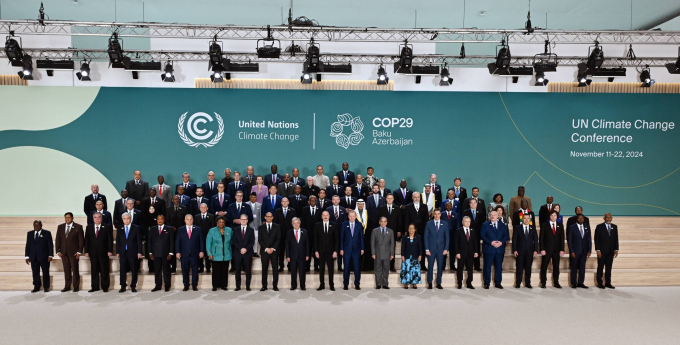
Coming in the wake of the Trump election, the COP29 international environmental conference, 11-22 Nov in Baku, Azerbaijan, was dismal.
Biden, Xi, Putin, Trudeau, Macron, Schulz, Modi, Albanese and Ramaphosa did not attend. For different reasons, the Prime Minister of Papua New Guinea, James Marape, stayed away saying COP was “a total waste of time” and the world’s leading climate negotiators declared it “not fit for purpose”.
Negotiations broke down, with a walkout of delegates from the poorest nations and small islands, before stumbling towards a miserable conclusion: a finance agreement that was a trillion dollars short and ten years too late for the most vulnerable victims of climate change.
The COP process has now run for 29 years, during which time the rate of CO2 emissions has risen by 60%, over 150 million hectares of forest have been destroyed, and we farm an additional 200 million methane-belching cows. By every metric the crisis has alarmingly escalated since 1995.
COP’s long history failure is rooted in the commitment of world governments to defence of capitalist property. Alongside one inconvenient truth, that climate science is real, there is a second: the climate crisis cannot be halted by capitalist methods. So long as the large-scale machinery and the Earth’s natural resources are owned as private property and exploited for profit, there is no way of organising production on an ecologically sustainable basis.
Generations of bourgeois politicians have now attended these talks and made earnest speeches about the need for climate action, and yet none has found an effective lever to halt rising global emissions.
Through the 1980s and 1990s, as scientists began to first seriously raise the alarm about climate change, fossil capital poured millions of dollars in promoting outright denialism to protect their profits. Over the last few decades, a new response has emerged: accepting the reality of climate change but taking no effective action and promoting false solutions.
The sociologist Stanley Cohen makes a useful distinction between “literal denial” of a crisis and “implicatory denial” that accepts the facts of a crisis but rejects “psychological, political and moral implications that follow”.
The more rational section of the bourgeoisie hoped that consensus on climate science would be sufficient to achieve necessary emissions reductions. After 29 years, this position too no longer seems tenable.
In the run up to these talks, 200 top climate advisors, including the lead negotiator of the Paris agreement, Christiana Figueres, argued that COP is no longer fit for purpose and the world needs to move “beyond negotiation to implementation”. But while there is undoubtedly a need for an international institution that can impose strict ecological regulation on production, Figueres and her allies can have no real confidence that COP can evolve into this role. Even the best elements of the ruling class are struggling to imagine a way out of the crisis.
Trump’s victory, with his maniacal policy of “drill, baby, drill”, marks a revival of the more primitive form of denialism. There is an extraordinary appetite for such make-believe and self-deception.
But putting out your eyes and ears, and pretending reality does not exist, is not a politics that has much of a future. Regardless of what the Trumpists believe, the ecological crisis will intensify during Trump’s time in office with direct impacts on our lives, the economy and world politics.
Against the various denialist tendencies of the ruling class, we fight to build a mass working-class movement that has a firm grip on ecological and social reality. The Paris goal of limiting warming to 1.5ºC requires an 43% reduction in global emissions by 2030 and sharper reductions thereafter.
That remains within reach, but it requires the organised working-class to rediscover the power of solidarity, and emerge as a social force that can effectively challenge the rule of profit and organise work to prioritise human and ecological need.
Comments?We welcome replies, corrections and debate pieces. Contact us