
Much anger has rightly erupted about Keir Starmer’s visit to Italy’s far-right leader Georgia Meloni, where he praised and sought to learn from her anti-immigration policies. What are those policies?
In November 2023, Italy signed a €670 million deal with Albania. The scheme is still not running but in theory Italy will divert 36,000 asylum seekers annually to Albania for detention and processing.
Starmer and his Home Secretary Yvette Cooper say they are considering copying this example. They emphasise that it differs from the Tories’ Rwanda plan in that under Meloni’s deal, asylum seekers will be processed under Italian jurisdiction, with admission to Italy if successful.
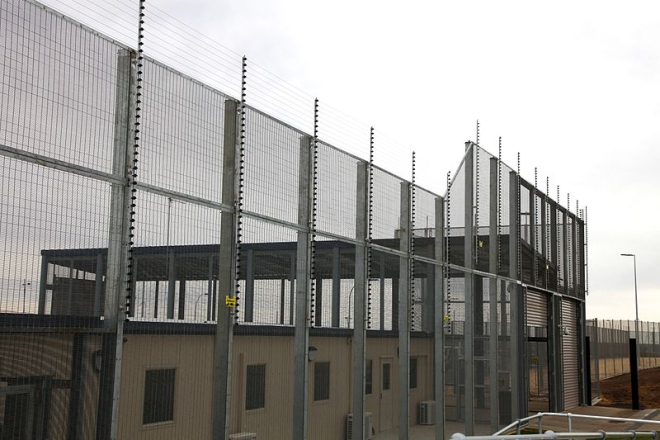
Nevertheless, offshoring places detainees further from support. Out-of-country detention centres are further from the reach of independent monitoring, legal assistance and solidarity campaigns.
See the results of Australia’s years of offshoring immigration detention and processing to Nauru and Papua New Guinea. Migrants were imprisoned for years in squalid conditions. There was rampant physical, verbal and sexual abuse and rape, including systematic child abuse. Some detainees were driven to self-harm and suicide.
Irregular arrivals have dropped significantly in Italy this year. Starmer said he wanted to understand this “remarkable progress”, commenting “It looks as though that’s down to the upstream work that’s been done in some of the countries where people are coming from”. This is a euphemistic description of Italy’s border-externalisation policy: paying authoritarian governments, militias and gangsters to stop migrants before they reach Italy or its waters.
Italy’s deal with Libya was signed in 2017, before Meloni’s premiership, by the allegedly centre-left Partito Democratico government. People attempting to pass through Libya face torture, enslavement, sexual violence and murder at the hands of the Italian government’s partners.
Meloni signed a similar agreement with Tunisia, with EU support. There, security forces receive European funding to imprison migrants in squalid, packed camps. Many report beatings, rapes and murders by police. Meloni has also placed curbs on humanitarian rescue ships.
Irregular crossings may be down due to these murderous deals — though will this drop even last? — but with safe alternatives barred, they have not stopped. And more than 1,400 are missing or dead in the Mediterranean since January.
Intensifying
Meanwhile, Labour’s leadership remains focused on intensifying policing against irregular Channel crossings, and ramping up deportations, while refusing safe routes and asylum rights. Interviewed by inews, Cooper admitted that the clampdown has driven more people into fewer, more overloaded boats, increasing the danger of crushing or drowning, while hiking prices. Dozens have died already this year.
Cooper blames this on smugglers’ greed, but the border regime creates the smugglers’ market. This was a predictable consequence of her actions: harsher enforcement has consistently pushed people into more dangerous routes.
The Labour Right had hoped to get Labour Party conference to endorse this approach. Their “Border Security Command” motion encouraged the government to escalate its crackdown by deploying new counter-terror powers against migration and speeding deportations, including by agreeing more “safe” countries as deportation destinations.
But the Labour Campaign for Free Movement rallied opposition. And with major trade unions swinging to oppose the motion, the Labour Right pulled the motion at the last minute rather than risk losing.
This was a symbolic win. Starmer’s government will continue implementing their policy regardless. But their forced retreat at conference shows their political weakness. A concerted, mass fight for safe passage, asylum rights, equality and free movement, crucially including through our unions, could force concessions from the government.
• The Labour Campaign for Free Movement has an online organising call, 7 pm on 10 October: register here
Comments?We welcome replies, corrections and debate pieces. Contact us