
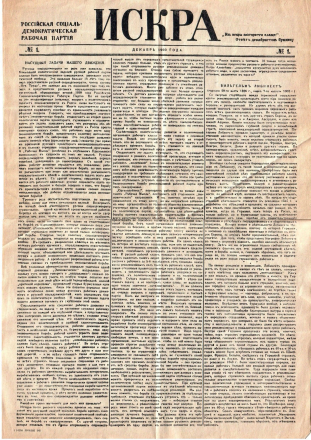
Fourteenth in a series of articles around the 100th anniversary of the death of Vladimir Ulyanov (Lenin))
What happened to Vladimir Ilyich Ulyanov (Lenin) after his brother was hanged by the Tsarists in 1887 is a part of the story that is shrouded in mystery laid down by the Russian state in the long era of left-wing Lenin-deification that succeeded his death in January 1924.
How did Ulyanov-Lenin come to break with the populist past and his brother’s short present? Trotsky summed up the official account as follows: “By his genius”. Ulyanov became Lenin because he was Lenin, and Lenin was a genius.
“There has to be a better way” is said to have been his response when the royalists hanged Alexander, to whom he was close then, though they did not talk politics. Alexander was writing an academic thesis on aspects of biology, and spent much time studying worms under a microscope. Vladimir, about four years younger, who had hero-worshipped his brother, had taken to mocking and dismissing his brother and was, it seems, aesthetically repelled by the worms.
Trotsky, who was himself, at 18, briefly a Narodnik, rejected the pious “better way” story as nonsense. Ulyanov was in a political world dominated still by Narodnism (revolutionary populism), by terror (the only way to action the Narodniks saw was killing top Tsarist officials), and counter-terror. Repression had been heavy since 1881.
Vladimir’s working through that to consistent Marxism was easier for his generation than for the previous one, but still, Trotsky maintained that there had to be more to it than an instinctive realisation that Alexander’s way (trying to kill the Tsar) was too costly.
Among the consequences for Vladimir of Alexander’s death was an acute feeling of guilt that he had so completely misunderstood Alexander’s nature. Alexander had reacted heroically. After his arrest he might have saved his own life by hypocritically appealing to the Tsar for clemency. He refused to appeal.
Reading
Vladimir read and re-read what Alexander had read. Alexander had been in the Marxist-leaning wing of Narodnism. Vladimir studied the Russian translation of Marx’s Capital, volume 1. But according to himself (talking to the Bolshevik Nikolai Valentinov in 1914) he especially studied and was captivated by Chernyshevsky’s didactic novel What Is To Be Done?, published in 1863. Ulyanov would of course choose the same title for his influential 1902 pamphlet.
Chernyshevsky’s was an utopian novel that depicted an ideal future world, and preached immediately the creation of a “new woman” and “new man”, practising a new self-abnegating morality here and now. It was highly influential among the intelligentsia.
A widespread version of Christianity preached that people were predestined for heaven or hell even before they were born, and yet, far from breeding fatalism, it bred great energy and great striving. Status and achievement in this world could hope to show you if you were among the damned or the saved. So too with Chernyshevsky’sWhat Is To Be Done? Its confident depiction of an ideal future coming soon led people not to acceptance of what they were, but to striving here and now to be among the elite, the “new women” and “new men”.
Building on Narodnism, it produced “here and now” highly-moral and revolutionary people, like Alexander Ulyanov. Narodnism preached self-sacrifice — that the intelligentsia should “give back” to society what it had given them.
People could read what they wanted to into Cherynshevsky’s utopian vision. By the 1890s, and the revival of activity with the authorities’ enforced call for help in the famine in 1891, what they had come to want had began to tilt heavily towards western-style Marxism, then called “Social Democracy”.
Confluence
There came into existence a Russian labour movement — a self-renewing labour movement that did not depend on outside stimulation to subsist.
For Bolshevism, the confluence of two things was necessary: the existence of a powerful, strong, credible, rebellious working class, and, with it, as part of it, a Marxist movement that had consciously rejected Bernstein’s reduction of Marxism to a sort of liberalism — “the movement is everything, the socialist goal is nothing”.
Both existed for a time in Russia, and in Russia as in no other place.
From 1881 to 1886 there were 40 strikes, in which 80,000 workers too part. In 1886-1890 450,000 workers struck, a six or seven-fold increase in the number of workers involved. One strike in St Petersburg involved 30,000 workers.
These articles deal mainly with the Marxists, with Menshevism and Bolshevism. But what the workers did was what gave the Marxists’ ideas and activities their significance.
In St Petersburg, in 1895, the League for the Emancipation of the Working Class was founded, involving no fewer than three future editorial board members of Iskra, Martov, Potresov, and Lenin.
In 1896 such a League was founded in Moscow; then in other cities.
Each of those Leagues was an attempt to found a Marxist party in one area.
The Bund, formed in the Jewish Pale of Settlement in 1897 (Martov was one of its founders), was the first successful attempt to found a broader Marxist party, and for some years was the strongest organisation in the movement. The Jewish workers were in the vanguard and would play a central role as the working-class and Marxist movement spread and developed. The pamphlet On Agitation, by Kremer and Martov (1894), was produced in the Jewish Pale of Settlement. The first congress of the all-Russian Social Democratic Party, in 1898, was held in one of the cities of the Pale, Minsk, and the Bund was its main organiser.
The reactionary press tried to prove that the Marxist movement and the labour movement were Jewish conspiracies. The Tsarist secret police developed a finesse in forging documents to “prove” that “the Jews” were”behind it all”. They forged a document that has had many, many editions in many languages, including German, theProtocols of the Elders of Zion (1903). It has justly been described as a “warrant for genocide”.
Exile
At the first Congress of the Russian Social Democratic Labour Party in 1898, there were only eight representatives from existing Leagues of Struggle, and some extra individuals. They were all eventually arrested. Vladimir Ulyanov was arrested in December 1895, sent to jailed, and then exiled, with Nadezhda Krupskaya, from then his wife.
In exile they translated Industrial Democracy by the Fabian reform socialists Sydney and Beatrice Webb,who would end their lives as the Labour couple Lord and Lady Passfield. But the experience of fighting police repression in St Petersburg and losing pointed imperiously to attempt to organise a nationwide Marxist movement not from Russia, where the police could again and again pick off the organisers.
Free again in 1900, Ulyanov went to Plekhanov and the prestigious Emancipation of Labour Group, in exile in Switzerland, and negotiated steps to set up a Marxist party abroad whose centre would be beyond the reach of the Tsar’s policy.
He wrote an article, Where To Begin, in May 1901, which expounded in a small space the idea which he would deal with in his famous book of 1902, What Is To Be Done? Here it is, abridged.
Where to Begin
In recent years the question of “what is to be done” has confronted Russian Social-Democrats with particular insistence. It is not a question of what path we must choose (as was the case in the late eighties and early nineties), but of what practical steps we must take upon the known path and how they shall be taken...
On the one hand, the “Economist” trend [which “overdid” the turn to economic agitation, downgrading broader political advocacy], far from being dead, is endeavouring to clip and narrow the work of political organisation and agitation. On the other, unprincipled eclecticism is again rearing its head, aping every new “trend”, and is incapable of distinguishing immediate demands from the main tasks and permanent needs of the movement as a whole. This trend... has ensconced itself in Rabocheye Dyelo [a journal published in exile in Switzerland, 1899-1902. The Bernstein-leaning “right wing” of the Marxists were influential in it]...
[Wilhelm] Liebknecht’s words are being quoted: “If the circumstances change within twenty-four hours, then tactics must be changed within twenty-four hours”...
In “drab” times
Rabocheye Dyelo, of course, mentions Liebknecht’s name in vain. The tactics of agitation in relation to some special question, or the tactics with regard to some detail of party organisation, may be changed in twenty-four hours; but only people devoid of all principle are capable of changing, in twenty-four hours, or, for that matter, in twenty-four months, their view on the necessity — in general, constantly, and absolutely — of an organisation of struggle and of political agitation...
It is ridiculous to plead different circumstances and a change of periods: the building of a fighting organisation and the conduct of political agitation are essential under any “drab, peaceful” circumstances, in any period, no matter how marked by a “declining revolutionary spirit”; moreover, it is precisely in such periods and under such circumstances that work of this kind is particularly necessary, since it is too late to form the organisation in times of explosion and outbursts; the party must be in a state of readiness to launch activity at a moment’s notice.
“Change the tactics within twenty-four hours”! But in order to change tactics it is first necessary to have tactics; without a strong organisation skilled in waging political struggle under all circumstances and at all times, there can be no question of that systematic plan of action, illumined by firm principles and steadfastly carried out, which alone is worthy of the name of tactics...
The question of terror [which in the Russian revolutionary tradition meant: killing top Tsarist officials] is not a new question at all; it will suffice to recall briefly the established views of Russian Social-Democracy on the subject.
In principle we have never rejected, and cannot reject, terror. Terror is one of the forms of military action that may be perfectly suitable and even essential at a definite juncture in the battle... The important point is that terror, at the present time, is [not] suggested as an operation for the army in the field, an operation closely connected with and integrated into the entire system of struggle, but as an independent form of occasional attack... This, in fact, is all that terror can be [now].
We, therefore, declare emphatically that under the present conditions such a means of struggle is inopportune and unsuitable; that it diverts the most active fighters from their real task, the task which is most important from the standpoint of the interests of the movement as a whole; and that it disorganises the forces, not of the government, but of the revolution...
Far be it from us to deny the significance of heroic individual blows, but it is our duty to sound a vigorous warning against becoming infatuated with terror, against taking it to be the chief and basic means of struggle...
Rabocheye Dyelo... exclaims: “Form assault columns!” But this is more zeal than reason...
The immediate task of our Party is... to call for the formation of a revolutionary organisation capable of uniting all forces and guiding the movement in actual practice and not in name alone, that is, an organisation ready at any time to support every protest and every outbreak and use it to build up and consolidate the fighting forces suitable for the decisive struggle...
We take the liberty of submitting to the comrades a skeleton plan to be developed in greater detail in a pamphlet now in preparation for print. [i.e. What Is To Be Done?]
Newspaper
In our opinion, the starting-point of our activities, the first step towards creating the desired organisation, or, let us say, the main thread which, if followed, would enable us steadily to develop, deepen, and extend that organisation, should be the founding of an All-Russian political newspaper...
Without [a newspaper] we cannot conduct that systematic, all-round propaganda and agitation, consistent in principle, which is the chief and permanent task of Social-Democracy in general and, in particular, the pressing task of the moment, when interest in politics and in questions of socialism has been aroused among the broadest strata of the population. Never has the need been felt so acutely as today for reinforcing dispersed agitation in the form of individual action, local leaflets, pamphlets, etc., by means of generalised and systematic agitation that can only be conducted with the aid of the periodical press.
The frequency and regularity with which a newspaper is printed (and distributed) can serve as a precise criterion of how well this cardinal and most essential sector of our militant activities is built up. Our newspaper must be All-Russian... Our movement suffers in the first place, ideologically, as well as in practical and organisational respects, from its state of fragmentation, from the almost complete immersion of the overwhelming majority of Social-Democrats in local work, which narrows their outlook, the scope of their activities... It is precisely in this state of fragmentation that one must look for the deepest roots of the instability and the waverings noted above. The first step towards eliminating this shortcoming, towards transforming divers local movements into a single, All-Russian movement, must be the founding of an All-Russian newspaper...
Political tribune
What we need is definitely a political newspaper. Without a political organ, a political movement deserving that name is inconceivable... Without such a newspaper we cannot possibly fulfill our task — that of concentrating all the elements of political discontent and protest, of vitalising thereby the revolutionary movement of the proletariat.
We have taken the first step, we have aroused in the working class a passion for “economic”, factory exposures; we must now take the next step, that of arousing in every section of the population that is at all politically conscious a passion for political exposure.
We must not be discouraged by the fact that the voice of political exposure is today so feeble, timid, and infrequent.
This is not because of a wholesale submission to police despotism, but because those who are able and ready to make exposures have no tribune from which to speak, no eager and encouraging audience, they do not see anywhere among the people that force to which it would be worth while directing their complaint against the “omnipotent” Russian Government.
But today all this is rapidly changing. There is such a force — it is the revolutionary proletariat, which has demonstrated its readiness, not only to listen to and support the summons to political struggle, but boldly to engage in battle.
We are now in a position to provide a tribune for the nationwide exposure of the tsarist government, and it is our duty to do this.
That tribune must be a Social-Democratic [i.e. Marxist] newspaper. The Russian working class, as distinct from the other classes and strata of Russian society, displays a constant interest in political knowledge and manifests a constant and extensive demand (not only in periods of intensive unrest) for illegal literature...
Collective organiser
The role of a newspaper, however, is not limited solely to the dissemination of ideas, to political education, and to the enlistment of political allies. A newspaper is not only a collective propagandist and a collective agitator, it is also a collective organiser.
In this last respect it may be likened to the scaffolding round a building under construction, which marks the contours of the structure and facilitates communication between the builders, enabling them to distribute the work and to view the common results achieved by their organised labour.
With the aid of the newspaper, and through it, a permanent organisation will naturally take shape that will engage, not only in local activities, but in regular general work, and will train its members to follow political events carefully, appraise their significance and their effect on the various strata of the population, and develop effective means for the revolutionary party to influence these events.
The mere technical task of regularly supplying the newspaper with copy and of promoting regular distribution will necessitate a network of local agents of the united party, who will maintain constant contact with one another, know the general state of affairs, get accustomed to performing regularly their detailed functions in the All-Russian work, and test their strength in the organisation of various revolutionary actions.
Steady yet flexible
This network of agents will form the skeleton of precisely the kind of organisation we need — one that is sufficiently large to embrace the whole country; sufficiently broad and many-sided to effect a strict and detailed division of labour; sufficiently well tempered to be able to conduct steadily its own work under any circumstances, at all “sudden turns”, and in face of all contingencies; sufficiently flexible to be able, on the one hand, to avoid an open battle against an overwhelming enemy, when the enemy has concentrated all his forces at one spot, and yet, on the other, to take advantage of his unwieldiness and to attack him when and where he least expects it.
Today we are faced with the relatively easy task of supporting student demonstrations in the streets of big cities; tomorrow we may, perhaps, have the more difficult task of supporting, for example, the unemployed movement in some particular area, and the day after to be at our posts in order to play a revolutionary part in a peasant uprising...
If we join forces to produce a common newspaper, this work will train and bring into the foreground, not only the most skilful propagandists, but the most capable organisers, the most talented political party leaders capable, at the right moment, of releasing the slogan for the decisive struggle and of taking the lead in that struggle.
No political party that wishes to avoid adventurous gambles can base its activities on the anticipation of... outbursts and complications.
We must go our own way, and we must steadfastly carry on our regular work, and the less our reliance on the unexpected, the less the chance of our being caught unawares by any “historic turns”.
Comments?We welcome replies, corrections and debate pieces. Contact us