
Something different this time round. Not a word or a phrase but a book recommendation for writers and potential writers.
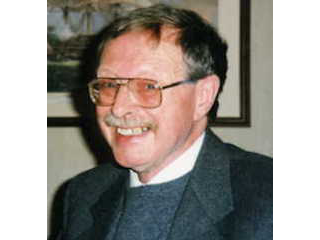
Ever thought how you might open a short news report to catch the reader’s attention, how to use a hyphen, or whether or not you need a colon or a semi-colon? Peter Fryer, a lifelong journalist, could be the one to help you.
In 1993 he wrote Lucid, Vigorous and Brief: Advice to new writers, published by Index Books with a second edition in 1998 (available via https://peterfryerfromindexbooks.wordpress.com/books-by-peter-fryer/). Fryer, who has an extremely interesting political history (of which more later), has written an informative and lively guide to the art of writing and I would suggest that this book is a valuable guide to those wishing to improve their writing skills or just setting out to put pen to paper (or more likely tapping the keyboard) for the first time.
However, for the moment, back to Fryer. He started his working life as a journalist on the Yorkshire Post and was sacked for attending a May Day rally! He then became a full-time journalist with the Communist Party, writing for the Daily Worker, later to become The Morning Star. One of his first assignments was to report on the arrival of the Empire Windrush.
Later, assigned to Budapest, Fryer covered the 1956 Hungarian Revolution, making the "mistake" of writing openly and honestly about what he saw. The Daily Worker editors were incensed and his dispatches were suppressed. He resigned, joining Gerry Healy's group, then the largest group claiming to be Trotskyist in the UK, and writing for The Newsletter and Labour Review.
However, the Healy group was soon to show the signs of the decay and degeneracy that would transform it into the so-called "Workers’ Revolutionary Party", an increasingly deranged sect, then seek funds from Libya and Iraq in return for applause for their governments, and see it collapse in 1985.
Fryer is the author of numerous books: a bibliography (readily available on line) by Patrick J. Kearney comes to twenty-five pages. With such a background it is hardly surprising that he has much to offer new – and not so new – writers.
Fryer’s book is full of useful advice and illustrated with many examples. Chapter 8 on "Eight Kinds of Bad Writing" is particularly noteworthy and elsewhere there is advice on just about everything from the hoary old question of the "split infinitive" (Fryer says just forget about it) to ‘bread and butter’ issues such as sentence and paragraph structure. A chapter is devoted to questions of personal style, something that Fryer believes is central to good writing.
He also recommends reading George Orwell’s essay Politics and the English language which first appeared in the journal Horizon in April 1946 and is re-printed in his Collected Essays, Journalism and Letters vol. 4. Fryer sums up his approach to potential and actual writers with the call, echoed in the book’s title, to be "Lucid, Vigorous and Brief" which originally came from the Fowler brothers’ 1906 publication The King’s English. Exceedingly sound advice, despite the outmoded, regal genuflection in its title.