
A phrase I have never come across before which I think might be of interest.
I was reading about the issues surrounding the resignation of Claudine Gay, the first Black President of Harvard University in the USA, in the ‘London Review of Books’. The arguments are quite involved and I give the reference at the end of this article so readers can check the details for themselves.
The author, Randall Kennedy, referring back to the movement mobilised by the death of George Floyd, states, ‘They [university based activists] insisted that racism was so prevalent that black students felt, and were right to feel, unwelcome and unsafe. Much of this amounted to imaginative mau-mauing with the aim of securing political objectives such as the establishment or expansion of diversity, equity and inclusion bureaucracies.’
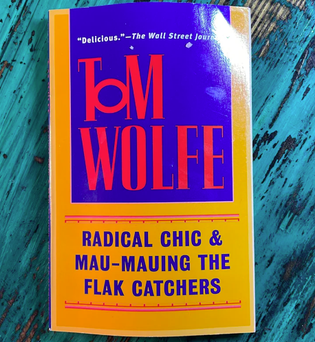
The Merriam-Webster dictionary gives the definition of mau-mauing as, ‘To intimidate (someone such as an official) through hostile confrontation or threats usually for social or political gains’. The earliest known use of the phrase in print, according to the OED, comes in the early 1970s and is associated with the writer Tom Wolfe (‘Bonfire of the Vanities’, 1987) who describes the phenomenon of mau-mauing in some detail in his collection of essays ‘Radical Chic and mau-mauing the Flak Catchers’, published in 1970. He describes how members of various minority communities, African-American, Samoans, Native-Americans, migrants from the Pacific Rim, would turn up at aid agencies in San Francisco and use various tricks and sometimes aggressive tactics (such as turning up in large numbers) to wrest concessions, usually financial, from the bodies concerned.
The aid agencies were often seen as corrupt and/or inefficient and such tactics were considered fair game. As far as I am aware physical violence was never used on these occasions. There may have been an earlier usage in the US Civil Rights Movement where mau-mauing served as a kind of ‘political barometer’ (according to Gerald Horne).
Mau-mauing comes from the 1950s anti-colonial movement (the mau-mau) in British Kenya which acquired a reputation for the intimidation of white settlers (the British colonial authorities, for their part managed, for some time, to hide their own ‘intimidation’ which consisted of the systematic use of torture and detention without trial). However, there are some doubts about the authenticity of the term mau-mau. It has been described as ‘Mumbo-jumboish’ and was coined by the British to denigrate the anti-colonial movement in Kenya.
Quite how this term migrated from East Africa to the USA is a bit of a mystery. In some usage it can now mean to terrorize, intimidate or threaten and is probably best avoided. A more harmless variant comes in Ugandan slang (according to the Collins Dictionary) where a mau mau can refer to a police officer who directs traffic.
NB. The use of the hyphen appears somewhat arbitrary. Usually the lower case is used.
[The article ‘Browbeating’ by Randall Kennedy appears in ‘London Review of Books’ Vol. 46, No. 2. 25 Jan. 2024]. Another article which might be of interest (and where the Gerald Horne reference and ‘Mumbo-Jumboish’ can be found) is Christian Alvarado’s ‘On Reading Mau Mau’ in ‘The Cambridge Journal of Postcolonial Literary Inquiry’ (2003) 10:1, 37-56. The Tom Wolfe essay can be easily accessed online.