
When I joined the railway industry in 1979 I had already experienced some of the more obvious problems with capitalism. A childhood in the east end of Sheffield in the 1960s was full of almost stereotypical images: steel works, lack of open green spaces, pollution from the furnaces, and chemical pollution in the local canal.
There was a strike at the nearest engineering firm, with meetings taking place at the entrance and the occasional speaker from what I can only assume was the Communist Party (CP). My mates and I took the piss as young kids do, but after a while I started listening to what he was saying and in my very youthful way (I was about nine), it started to make some sort of sense.
I never followed it up with the CP, but it started me thinking about what my parents had to put up with in their everyday lives, and how unfair it was to them and the other families around in the rows of terraces. At that point I didn’t think so much of unfairness to myself, since all the other kids around had similar conditions to me.
Fast forward to my leaving school in 1977. I had no particular career aims and drifted into a couple of low-grade semi-clerical jobs until 1979, when I applied for an entry-level job on British Rail.
The pay was poor, but surprisingly, the feeling of belonging to something worth fighting for was instilled in you by the blend of post-war optimism from the older guys and the fact that some people were a bit more worked-out in their thinking. It was not management who had sole charge over what went off.
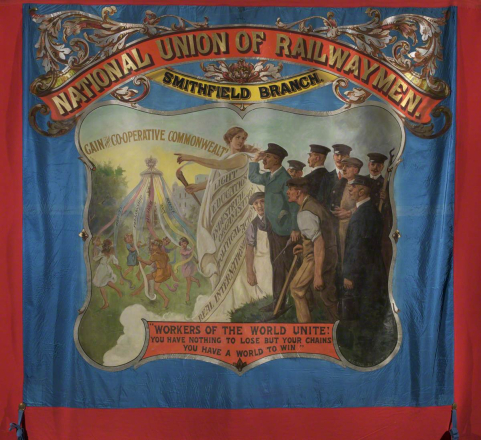
None of that was organised in any sort of way. The union at that time (the National Union of Railwaymen, NUR, whicn in 1990 merged into RMT) was controlled by a combination of right wing careerists, bureaucrats, and the Communist Party. That was my first experience of the CP in action, or should I say inaction. They said much but actually achieved nothing, the right-wingers and full-timers running rings around them.
I attended a few union branch meetings, but with no clear idea what needed to be done.
Fortunately for me, I met another worker, Rob, who had given a lot more time and thought to how the world worked. He took the time to chat, and soon my raft of vague thoughts and ideas started to make some sort of sense. More importantly, I began to see how we could go about actually getting other people interested.
There was no “road to Damascus” conversion, but more of a patient education in organising and what could be called the classic Marxist texts.
Our labours inside our union branch brought some successes and some failures, but the basic ideas from our discussions hold as firm for me today as they did back then.
The only force capable of making the change in society to a socialist order is the working class, and that change should be by our own hands, not given as some sort of beneficence from on high.