
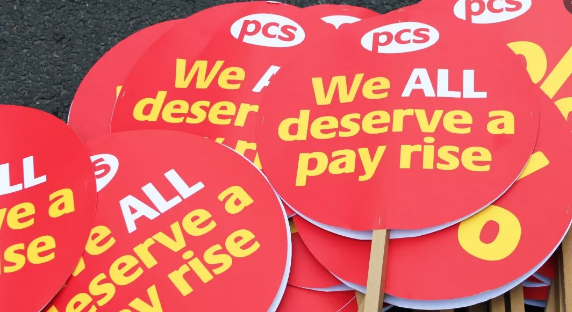
Members of the PCS civil service union appear to be heading for another tough pay year. National talks with the Cabinet Office (CO) are going nowhere fast following the PCS leadership’s June derailment of our 2022-23 national pay campaign.
On the 10 January the Government published its “Civil Service People Plan 2024-2027”. Despite the national pay talks the People Plan does not address:
• The fifteen year historic decline in the value of civil service pay, even though it acknowledges that “Civil Service average pay within grades has shown a general downward trend in real terms since 2008, due to below-inflation increases.”
• The lack of pay progression.
• Endemic low pay.
• Civil servants undertaking differently graded work being paid the same salary because they are all on the national living wage.
• The substantial variations in pay between civil servants in the same grade but working for different civil service “delegated units”.
• The demand for national pay bargaining.
The only pay aim identified as an “objective” and a “key priority” in the Plan is individual performance related pay, a pay practice long opposed by PCS.
While the Plan commits to developing a pay reward strategy in 2024, it does not suggest that it will address PCS’s key concerns as part of the 2024/25 pay year. The Tories appear intent on again playing hardball over pay before the next election.
Early last September the outgoing General Secretary Mark Serwotka reported that PCS had told the CO that it needed “...to see significant progress over the next four to six weeks…” but he stated that the “government is already beginning to talk tough about what it intends for the public sector in terms of pay in 2024... it is reasonable to assume further strike action is likely to be needed... later this year or early next.”
On 7 December PCS reported that the talks were “...unlikely to be enough to end our dispute and we are putting in place plans to get members ready for a ballot in the new year.”
Four to six weeks have come and gone more than once, as the CO knew they would do, because the Left Unity group that dominates PCS had allowed legal strike mandates to lapse. Yet members have still to be told of either “significant progress” or of a ballot for strike action.
The difficulty for LU is that they have demobilised members for the last seven to eight months, pumped out untrue and misleading messages, the core of which is that they have extracted a fortune from the Government; stopped collecting the strike levy; and failed to keep members properly informed of negotiations.
There is no easy way to put this debacle right, but it must be put right. With National Executive Committee elections due the spring, it is vital that all those who opposed the NEC’s derailment of the national pay dispute join forces in a single campaign to change the leadership and policies of PCS.