
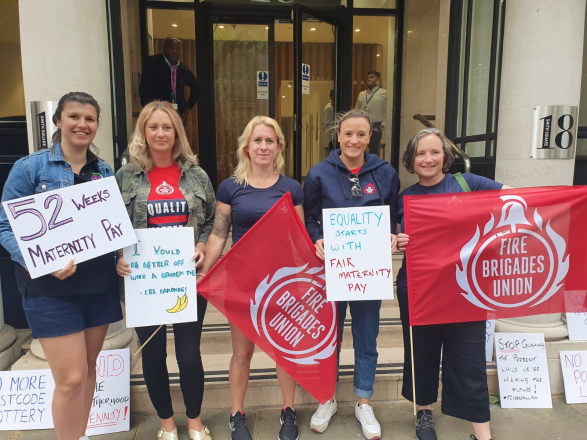
The country’s second largest fire service has approved maternity leave of 52 weeks on full pay.
West Midlands Fire Service, the second largest in the country, has approved 52 weeks full pay for employees on maternity and adoption leave. Paternity leave was increased from one to two weeks with full pay.
“This is a fantastic result for members in the West Midlands, for which we applaud the efforts of the brigade representatives and the local women’s committee,” said FBU assistant general secretary Ben Selby.
“We are seeing other services move significantly too, which again is positive — but our fight will not cease until we achieve 52 weeks’ maternity pay for all, in all fire and rescue services”.
The win was boosted by the FBU’s national Fight for 52 Campaign. The union say there is a postcode lottery in the UK fire and rescue service. A firefighter in Cornwall receives £15,000 less maternity leave pay than her equal in Derbyshire.
Fight for 52 seeks to address the dire imbalances in maternity provision across the UK and is part of the Equality Matters campaign, the union’s commitment to fighting inequality at work.
Fight for 52 demands include that:
“All UK fire employers extend the current arrangement for maternity leave to 12 months on full pay following the date of birth. Pre-birth provisions must also be addressed, ensuring that expectant mothers are protected from the work-related exposures to fire contaminants. These improvements must be reflected urgently in maternity provisions laid out in the Grey Book (the scheme of conditions which apply across the service).” Improved parental leave is a key demand across sectors. In firefighting there are particular issues, lack of proper maternity leave puts new mothers and babies at risk from fire contaminants.
One of the significant outcomes of a study conducted by childcare provider Koru Kids and the Fatherhood Institute research and consultancy organisation, was that eight in ten parents feel that unequal maternity and paternity policies reinforce traditional gender stereotypes, encouraging the mother to take on a homemaking role, while the father returns to work.