
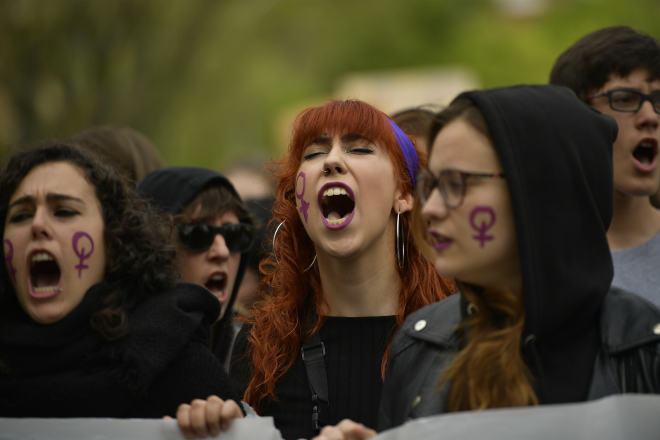
New sexual consent legislation came into effect in Spain in October 2022 – “La Ley de Garantía Integral de la Libertad Sexual” – stating that sexual consent must be explicit and cannot be assumed to have been given. Previously, victims of sexual abuse, harrassment and violence had to prove violence, threat of violence or coercion, or demonstrate that they had resisted the perpetrator.
Under this new law, popularly known as the “Only Yes Means Yes” law (“La Ley del Solo sí es sí”), various lesser crimes have been recategorised as sexual assault. A range of behaviour that previously was not criminalised will also now be recognised as such. This includes: use of digital violence (e.g. non-consensually sharing sexual images of the person), use of drugs and alcohol to facilitate sexual assault, and street harrassment (i.e. provocative comments, whistling or gestures).
The impetus for the legislation came from two high-profile rape cases in Spain in 2016 and 2020, and feminist mobilisations in response to them.
In 2016, five men who raped an 14-year-old woman in Pamplona during a popular bull-running festival were acquitted. The case (popularly referred to as “the wolf pack”) and the subsequent court decision sparked outrage across Spain. In particular, protestors were furious that the courts had found that video footage showing the victim unmoving and with her eyes closed proved that there was consent. One of the men accused was a member of the Civil Guard and another a member of the Spanish Army. In 2019, after widespread mass demonstrations, the decision was reversed. The five men were charged with rape and sentenced to 15 years in prison.
A year later, in Catalonia, a 18 year-old girl was gang-raped by a group of men. Because the girl was intoxicated and did not (indeed was not in a state to) fight back, the courts ruled the men were only guilty of the lesser crime of sexual abuse. The courts ruled categorically that it was not rape.
In 2021, the number of rape cases increased by 34% compared to the previous year. The Interior Ministry estimates that in 2022 around 2,870 rapes took place, an increase of 53% compared to 2019 (this amounts to just under eight women raped every day, and the actual number is very likely higher). Close to 1-in-10 women over the age of 16 have suffered sexual assault by either a partner or an ex-partner over the course of their lives. In September 2019, mass demonstrations took place after 19 women were killed by current or former partners over that summer. According to a study carried out by four Spanish public universities, in 80% of sexual assault cases the victim knows the perpetrator and 60% occur in the victim´s home.
CLUMSY LAWS OR RIGHT WING JUDGES?
The new law has faced criticism, however. Besides recategorising a range of behaviour as sexual assault, it also reduced the minimum and maximum jail sentences for those crimes. As a result, many prisoners have been able to reduce their sentences on appeal. The government (a coalition between social democrats PSOE and left-wing Unidas Podemos) argue that the loophole has only been interpreted in such a way because Spain's judiciary is largely controlled by the right. How much this is due to judicial conservatism as opposed to carelessness on the part of the coalition government is unclear. One suspects it is a combination of both.
The coalition government is divided on how to resolve the issue. Unidas Podemos (UP) argues that the law as it exists does not require amendments, whereas the PSOE argues that further “technical adjustments” are required (some in the party have even gone so far as to say they will recruit support from the centre-right party Partido Popular, if need be). By April this year, 104 offenders had been released and a further 978 had their sentences reduced, according to government data. While there is a case to be made for focusing less on prison and criminalisation to tackle gender-based violence, this would be an extremely clumsy way of going about it.
A CLEAR STEP FORWARD
Beyond enshrining the need for explicit consent, the law also mandates sexual education at all stages of the education system and investment in public 24-hour crisis centres. While these are both positive developments, the details of both and the level of financial backing for them is unclear.
Spain has recently made progress in other areas of gender equality (e.g. narrowing the gender pay gap) and has passed some other progressive legislation, allowing anyone over the age of 16 to change their legally registered gender; easing restrictions for young people accessing abortion; and introducing paid menstrual leave. In spite of this, much of what makes people vulnerable to sexual and domestic violence — low pay, precarious immigration status, and rising rents and house prices — persist or are getting worse.
In the next couple of years, we will see how this law is enforced in the real world. All things considered, it is a significant step forward. Having the state recognise that a range of behaviour is sexual assault even if it does not involve violence, the threat of violence, or resistance on the part of the victim is significant. The law provides support to those fighting sexual violence, workplace sexual harassment, and domestic violence. In particular, the promise of an expanded network of crisis support centres should be pushed to ensure that they are well-funded, democratically controlled, integrated into the wider public health system and easily accessible even to those living in rural or suburban areas. Likewise, the mandate for expanded sex education should be pushed to be LGBTQ-inclusive, as well as including discussions on consent and pornography.
It remains to be seen what the lasting, concrete results of this legislation will be. Ultimately, it will depend on the Spanish feminist movement and the Spanish left.