
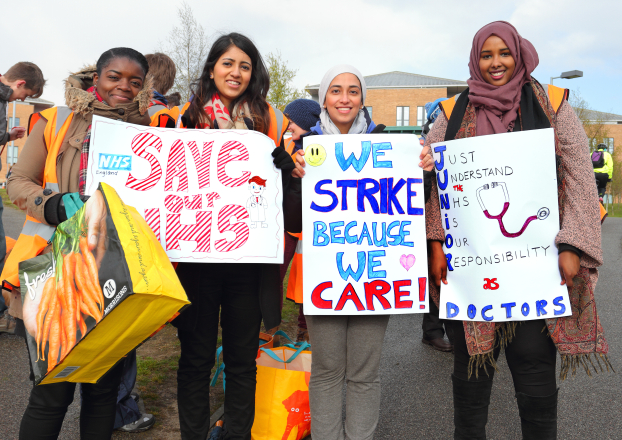
Junior doctors fighting over pay held three more days of well-supported strikes on 14-17 June, with lively picket lines and a march and rally of 1,000 in London.
Among NHS workers fighting for a pay rise, junior doctors have so far waged the most determined campaign, both in terms of clarity of demands (they are clear they want a real-terms increase and a timetable for “pay restoration” to 2008 levels) and the number of strike days. But as a junior doctor centrally involved in the dispute explained in Solidarity 676 last week, the current level of action — three days a month, with more of the same on the cards — looks not enough to dislodge the government.
Another junior doctor activist who spoke to us this week expressed concern that their dispute could go the same way as the RMT’s on the railways, failing to escalate and losing momentum (though the BMA has done better than the RMT in terms of the number of strike days).
The junior doctors are now reballoting under the anti-union laws, 19 June to 31 August, to extend their strike mandate. Meanwhile consultants — senior NHS doctors — finish their ballot over pay on 27 June, and may strike in late July.
The RCN nursing union’s reballot for further strikes closes on Friday 23 June. RCN General Secretary Pat Cullen has publicly expressed doubt that they will make the legal turnout threshold, saying the anti-union laws will put the dispute in a “dead end”. It can’t have helped that Cullen and her leadership first tried to push through an extremely bad deal.
Meanwhile Unite is continuing strikes in the NHS (where it is mostly a minority union) over pay, with some Trusts striking in June (including some on the 14th, coinciding with the junior doctors). Unite says it is balloting to extend the strike to other areas.
Three NHS unions — Unite, Unison and GMB — are the Labour Party’s three largest affiliates, by far, but they are doing little or nothing to pressure Labour over the issue of NHS pay or the health service generally. In response to the pay disputes, Starmer’s leadership refuses to commit to anything, only repeating its pledge to recruit more medical and nursing students. As one striking junior doctor pointed out to the Guardian, this is like responding to the problem of a leaky bucket by saying you’ll pour in more water.