
The tiny, inactive and secretive BAME Labour grouping has been back in the spotlight, after Labour’s National Executive junked plans to create a democratic structure representing black, Asian and minority ethnic party members.
To give a flavour of this “organisation”, in 2018 it had less than a thousand members, out of an estimated 70,000 party members of colour. Yet it has representation on the National Executive.
A quick look at BAME Labour’s website confirms it is a non-organisation. But its “What is BAME Labour” statement is worth scanning.
Generally vapid in the extreme, it says:
“The Labour Party movement Black Sections made history when they campaigned to elect the first four Black MPs to the House of Commons in 1987… By 1990, Black Sections was [sic] integrated into the Labour Party as the Black Socialist Societies, and eventually became BAME Labour as it exists today.”
For a while at least, local Labour Black Sections represented an actual activist movement in the party; if BAME Labour can at all be presented as their inheritor, it is a continuation and degeneration of the worst, most bureaucratic and careerist elements within them.
Though the explanation of the significance of Black Sections primarily in terms of electing MPs exposes a careerist worldview, 1987 was a significant landmark. But what the statement says about it is flatly wrong. Labour’s first MP of colour (given one of the 1987 intake was the Asian Keith Vaz, still apparently central to the BAME Labour clique, that is clearly what Black means here) was elected not in 1987 but 1922.
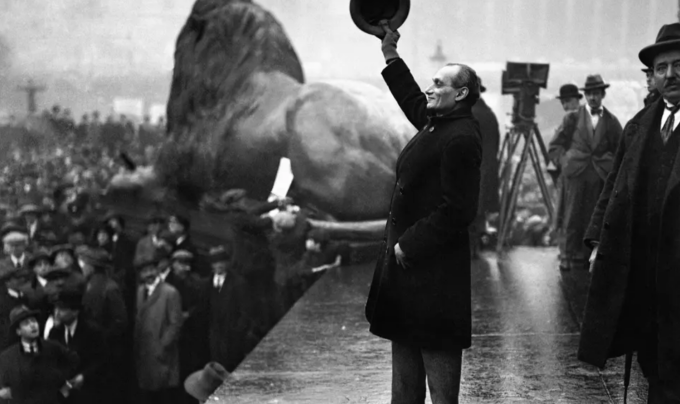
In November 1922, the working-class and labour movement stronghold of Battersea, in South West London, elected Indian anti-colonial fighter and revolutionary socialist Shapurji Saklatvala as its MP. A powerful organiser and advocate for the exploited and oppressed, Saklatvala was the first person arrested during the 1926 General Strike; after he toured India, the British government banned him from returning there until his death; and future Indian prime minister Nehru called him “the most important Indian nationalist outside the country”.
A century on, there has been very little celebration of Saklatvala, and none at all organised by the Labour Party. BAME Labour’s self-presentation is part of that process of erasure.
Taking the statement’s words - “the first four Black MPs”, no “Labour” – literally, they also erase Dadabhai Naoroji, the Indian nationalist leader elected as a left-wing, union-linked Radical Liberal in the 1890s. (Also arguably earlier, more ethnically mixed or ambiguous MPs.)
Measured against inspiring figures like Naoroji and Saklatvala, the conservative hacks who run BAME Labour look even more ridiculous. No wonder they want to airbrush them out of history.