
Our union, PCS, is planning a series of selective strikes across several departments, including the Department for Transport, the Home Office, and the Department for Environment Food and Rural Affairs (Defra). The aim here is to bring out sections of the membership that have particular industrial leverage for a sustained period.
We hope any day now to send in the strike notices, as we are legally bound to, under the anti-trade union laws. The National Executive Committee (NEC) meets on 7-8 December and may discuss the next phases of the strike programme.
The National Disputes Committee (NDC), a sub-committee of the NEC, now meets weekly. Any branch or group committee can submit proposals on strike strategy to this committee. We need the widest debate on what action to take so I’d encourage branches or groups to discuss the kind of strategy they want, including making the case that they should be called out on strike, and send it to the NDC.
The NEC has already agreed in principle that we will be increasing union dues, with the increase ring-fenced for the strike fund. Our policy is to pay full strike pay, so no members taking selective action should lose any money.
I’m pleased the union has agreed to utilise selective action, something others and I (when I was a lay member) in the Independent Left argued for. However, we argued, and I still believe, that such action must be in conjunction with as much all-out action as can be delivered.
Therefore I hope that the NEC will agree all-out strikes. Given the votes on the NEC, that will probably only happen in the New Year.
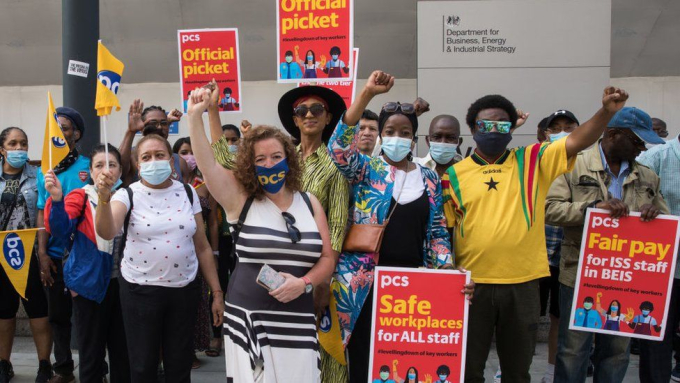
Alongside the national dispute, local and departmental disputes are continuing. Workers in the court service will strike in December against the imposition of the “Common Platform” system, a new piece of workplace software which the employer is using as a pretext for job cuts, even though the system increases workload rather than reducing it. And at BEIS, outsourced workers employed by Aramark and ISS have won an 11% pay increase following the threat of strikes. It’s important the union continues to empower these local disputes as the national fight continues.
• John Moloney is Assistant General Secretary of the PCS (civil service union), writing here in a personal capacity