
Just two weeks after Belgrade’s much-talked-about EuroPride, Montenegro held their own week-long series of events; this Montenegro Pride (8 October) would be the country’s tenth. But in contrast to Belgrade’s protests and aggression in the weeks leading up to the event, this year Montenegro would see none of the same aggression.
“Having been involved since the beginning, I’ve seen a huge change,” said Danijel Kalezic, member of the organisational committee of Montenegro Pride and an activist who has campaigned for LGBTQ rights and equality for over a decade.
“I was here from the very beginning, and at the very first pride here, it was a small war in the street: fighting with police, a lot of tear gas,” he described. “But you see here today? Everything is quite normal — a nice, big event of happy people.”
The generally safe atmosphere hasn’t come by chance. The threat of the Serbian Orthodox Church spreading anti-LGBT propaganda and expanding their presence in public and political spaces is rife in Serbia, but Montenegro isn’t spared, either, said Pride board member Nada Vojinovic. “The organizers play a big role in keeping Montenegro Pride a peaceful protest,” she said. The theme of this year’s event: No more buts.
“It means we are not tolerating any partial rights or support,” said Vojinovic. “When someone is supportive BUT you should not do it publicly, or we will give you some of your legal rights like getting married BUT it can’t be perceived as marriage. We are not asking for any privileged rights but basic human rights.”
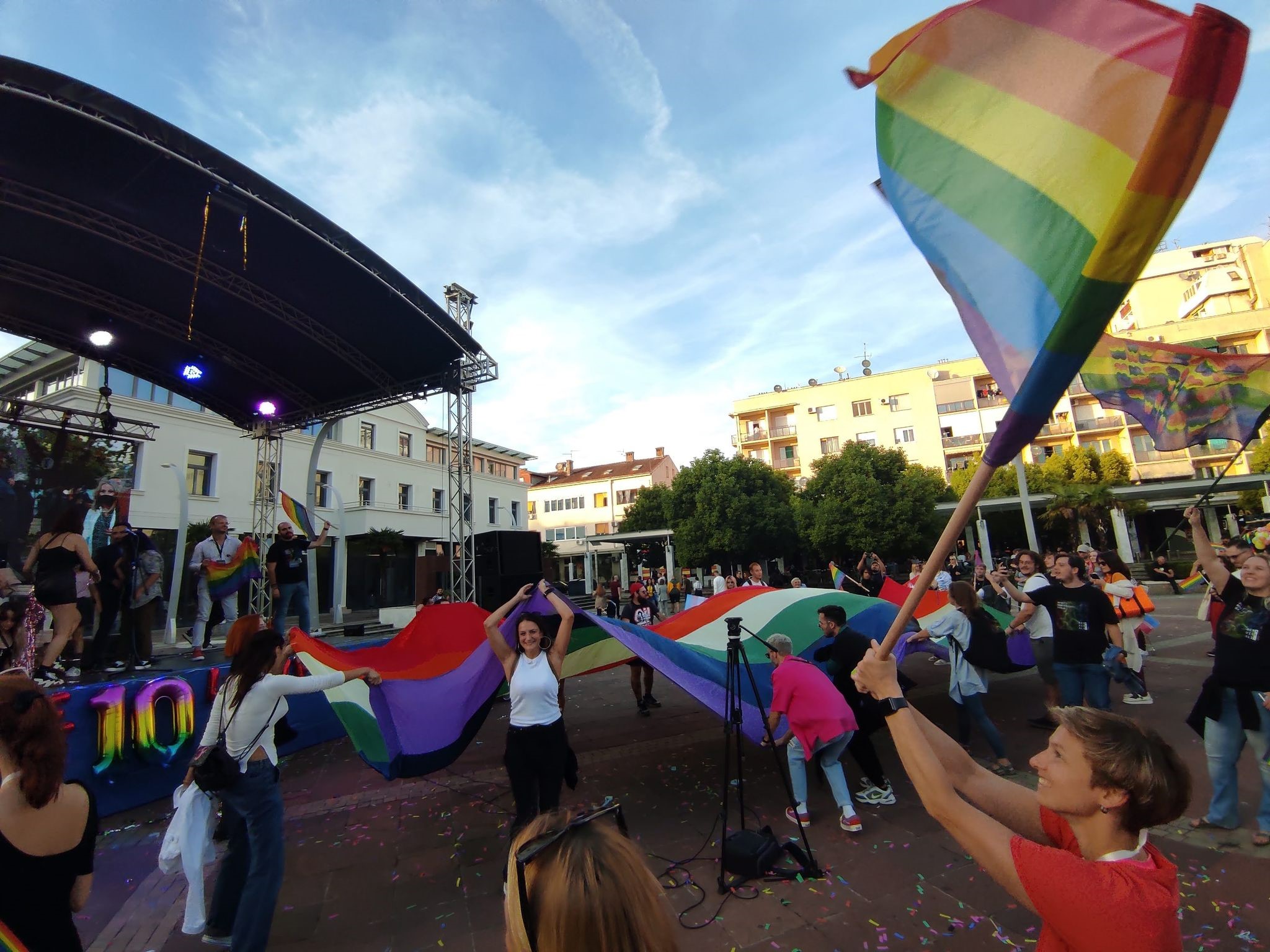
Gathering at Independence Square in the afternoon, organisers estimate 400-500 people participated — the largest Montenegro Pride has seen. Among them were members of the local government and a team from the country’s EU delegation.
“It’s important for the EU to be represented because it’s an issue that still has problems here,” said Yngve Engstroem, who led Montenegro’s EU delegation. “Members of the community are not treated as equal, and there is still stigma.”
Despite their non-EU status, he stressed on the importance of their participation. “It’s part of the EU values, it’s part of a dialogue, we promote legislation that is here for everyone,” Engstroem said.
For long-term organiser Kalezic, it’s visibility that is most needed, and an essential part of why Pride needs to be held. “Having pride in Montenegro is important because of a lot of different things, such as our lack of visibility: visibility of our identities, visibility of the problems we are facing,” he said, “but also because Pride is making change in people’s attitudes.”
During the march which took participants through and around central Podgorica, observers looked on from their windows as a moderate police presence was felt on the streets. “We are noticing positive change, but there are still so many people who do not like us,” Kalezic said. “But change is coming every year.”
“With Pride, people see that we are not afraid, and we are not different in a negative way,” he said. “They have a chance to interact with us and know us better.”
The next step for Montenegro? Kalezic answered without hesitation: Legal gender recognition law.
As the country of just over 600,000 presses on in a fight for full equality and acceptance, it is important to acknowledge both the changes that have become reality, and the struggle that still looms.
In a message of support for the community in Montenegro, Engstroem called on the resilience members of the LGBT community have continued to demonstrate. “I think it’s important to not be afraid of who you are, to do what you think is best, and to stand free,” he said.
And while a right-wing resurgence storms many countries around the world, “the Balkans are the worst when it comes to supporting women,” Vojinovic said. “You can only imagine what women in our community deal with as they face multiple forms of discrimination, misogyny, violence and hate speech.” But the team is pressing on. “For Pride 2023, we will go harder and stronger!”
“A lot of people forget that when we have rights, we can also lose those rights,” Kalezic added in a message to allies abroad. “So, don’t take your rights for granted because someone was fighting for rights that you currently have.”
Comments?We welcome replies, corrections and debate pieces. Contact us