
“If someone suggested that we could understand the Black Lives Matter struggle without some knowledge of the historical background of slavery, lynchings, Jim Crow and so on, we would find it unconvincing, to put it mildly. But many on the left seem to think that they can comment on the crisis in Ukraine while being totally ignorant of that country’s history.”
So begins Sri Lankan-Indian Marxist Rohini Hensman’s article for the US socialist magazine New Politics (2 March).
After a thought-provoking review of that history, her conclusion is: “Socialist internationalism in this crisis means supporting the right of the Ukrainian people to self-determination as a multi-ethnic democracy.”
Hensman explains that what became Ukraine has a long history as a distinct people, but also of being dominated — from the late 17th century mainly by Russia. By the late 19th century, which saw the growth of nationalist and socialist politics in Ukraine, Russian socialists analysed the relationship as colonial. Lenin compared it to Ireland and England.
Hensman also discusses the oppression of the Crimean Tatars, a mostly Muslim ethnic group present in Ukraine for many centuries.
She discusses the long history of Russian imperialism, and how debates about Russia’s colonies was central to development of the empire’s revolutionary movements.
During the Russian revolution, Ukrainians fought a national liberation struggle. In the early years of Bolshevik rule Ukraine enjoyed a brief period of national freedom as an autonomous Soviet Republic.
Hensman emphasises the Bolsheviks’ commitment to national self-determination: “Lenin[‘s] anti-racism, anti-imperialism, and identification of Great-Russian chauvinism as the Russian version of White supremacism set an example for all socialist internationalists to follow.” She explains Lenin’s “last struggle” against Stalin’s nascent Great Russian chauvinism, including in relationship to Ukraine. This while she expresses openness to discussing his and the Bolsheviks' errors in theory and practice.
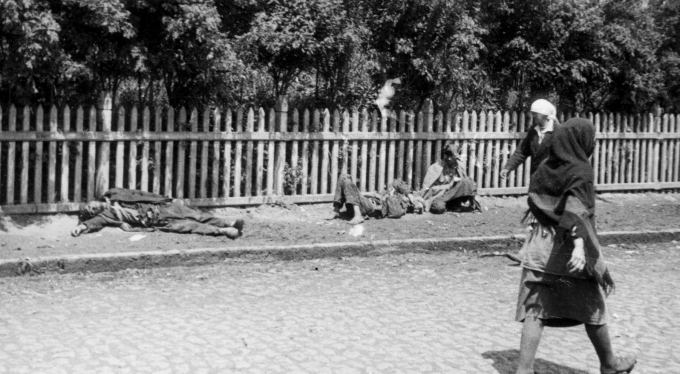
With the rise of Stalinism, Ukraine’s fortunes went sharply into reverse. Once the bureaucratic counter-revolution had triumphed, restored national oppression burgeoned in extreme form, resulting in genocide and millions of deaths in the 1930s. In 1944 Stalin deported the Crimean Tatars en masse, with half their population perishing.
Ukraine suffered genocide again under the WW2 German occupation, with 3.5 million dying at the hands of the Nazis, including 1.5 million Jews.
After the war Ukraine continued to suffer national oppression under the Stalinist USSR. Hensman argues it is testament to the Ukrainian sense of national identity that the country again asserted its independence, in 1991. With 84% participating, 92% voted for independence, including 83% in the eastern regions of Luhansk and Donetsk. This although the US government was opposed to Ukrainian independence.
She points out that the end of the USSR involved a process of decolonisation. “While the economic plunder and corruption which followed were disastrous, it should not be forgotten that in his own way, Gorbachev initiated a democratic anti-imperialist revolution.”
Putin’s rise represents a counter-revolution, seeking to crush all democracy and rebuild the Russian empire. The article describes in some detail the evolution of Putin’s regime since 2000, including how it has revived some of the political features of Stalinist rule.
Hensman emphasises Putin’s alarm at the popular upheaval in Ukraine in 2014. She describes the brutal oppression of the Crimean Tatars after Russia annexed Crimea that year.
She discusses Putin’s support for far-right movements in many countries — and the disingenuousness of his claim to be fighting to “denazify” Ukraine.
Hensman is no apologist for Western imperialism. She argues that Western adventures, for instance in Iraq and Afghanistan, have undermined democracy globally. She notes that Western governments have never consistently defended Ukraine’s sovereignty, pointing out how, for example, the EU states approved the Nord Stream 2 gas pipeline despite burgeoning Russian aggression in Ukraine and Syria.
Hensman considers what can be done. She argues that “there is no harm in talks, but it should be understood that negotiations with Putin are about as useful as negotiations with Hitler turned out to be. They will not stop the war. The only people who can really end it are the people of Ukraine and Russia” — and they need solidarity.
Reviewing Putin’s criminal activities far beyond Russia’s borders, she argues that “winding up NATO is a worthy goal, but it will have to wait until Putin stops acting as its recruiting agent”.
• Review of Rohini Hensman’s 2018 book Indefensible: Democracy, Counter-revolution and the Rhetoric of Anti-Imperialism here
Comments?We welcome replies, corrections and debate pieces. Contact us