

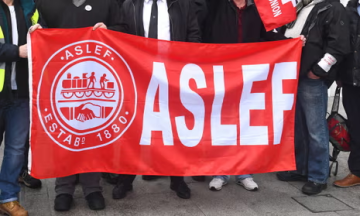
Last week, Aslef announced to its members the proposed settlement of its two-year-long dispute with Train Operating Companies (and with the Rail Delivery Group, and the Department for Transport, and the Tory government). The offer made spans three years – the two years that the dispute concerns (2022/3 and 2023/4) and the current pay year, 2024/5. The offer is 5% for year one, 4.75% for year two and 4.5% for year three.
There are no "strings" to this offer, that is to say that the union has not negotiated away any of its members’ terms and conditions of employment in return for the pay settlement. If accepted, it will be fully back-paid, with the back-pay compounded, and pensionable, although pension contributions will not be deducted from the back pay.
There is no doubt that this offer is a real improvement on the last offer received from the Tory government, which was 4% for each of the two years covered by the dispute, in return for a bonfire of key terms and conditions.
There is also no doubt about the fact that this settlement is substantially better than deals secured by a number of other unions in the post-pandemic strike wave, although it is not as good as some – for example, the Liverpool dockers, who won pay increases of between 14.3 and 18.5%. Notably, hose major gains were won after sustained strikes; we have argued consistently that more sustained action in our dispute, rather than sporadic 24-hour strikes, could have produced better results.
The union leadership clearly sees this settlement as a vindication of their “wait for Labour” strategy. Off The Rails takes a different view, having argued all the way along that escalated strike action had the potential to win a better offer from the Tory government. We say that a Labour government desperate to be seen to be "competent", and with a structural link to the trade union movement, might well be susceptible to further pressure. Instead, our leaders want us to accept the new government's first offer, without even attempting to push them further.
Despite the improved percentage pay rises, this offer is still a pay cut when measured against the inflation figures for the period it covers. Even if we were convinced by the idea that we must accept below-inflation figures for 2022 and 2023 because inflation was abnormally high during that period, the third year of the settlement does nothing to start making back what has been lost in real terms during that period, and in 2020 and 2021, when there were no pay increases at all.
This is why we're calling for a no vote in the referendum on the offer. We believe that turning down this pay cut and calling further action could win more.
We understand many fellow drivers will vote to accept the offer, seeing it as an improvement (which we agree it is) and perhaps not wanting to "gamble" on pursuing further action. But even if the vote to reject turns out to be a small minority, that minority can organise itself to be a radicalising element in the 2025-6 pay campaign and beyond, to push for a more assertive strategy (i.e., more sustained strikes, rather than sporadic action), and a clear, concrete demand for a no-strings, above-inflation increase that begins to restore the money we've lost through our years of below-inflation rises, or no rises at all.
Comments?We welcome replies, corrections and debate pieces. Contact us