

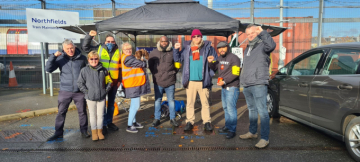
RMT members on London Underground have voted to take industrial action to defend staffing levels and terms and conditions, including pension arrangements.
The ballot returned a 94% majority for strikes, and 95% majority for action-short-of-strikes, on a 52% turnout. Clearing the arbitrary thresholds imposed by Tory anti-strike laws is always a challenge; LU bosses conducted a vigorous propaganda campaign to dissuade workers from voting. To have cleared the thresholds is therefore a testament to the hard work of RMT reps in mobilising the vote, in circumstances made more difficult by the onset of the Omicron wave.
The result itself will send a message to LU management. Workers have clearly not swallowed their claims that the announcement that 600 stations jobs would be cut was just a “proposal”, or that plans to reform pension arrangements were “just a review”. But it’s vital that the ballot result is not just seen as a bargaining chip in the hands of union negotiators to be held in reserve if talks go badly. Action must be called.
A reps’ meeting will take place on 13 January, where proposals for the next steps will be made and debated. Tubeworker believes action should be named as soon as possible after this Omicron wave peaks. Although this will doubtless elicit accusations of “disrupting London’s recovery”, post-Omicron rising passenger numbers will give us greater leverage. Action must not consist of token strikes, but of a programme of sustained action. This could consist of a mixture of all-out strikes and selective action, with different groups of workers (train drivers, station staff, engineers, etc.) striking at different times to maximise impact.
Combining industrial action with a public-facing political campaign for decent funding for TfL is also essential. Tube strikes invariably attract hostility from the tabloid press and from some passengers angry at the disruption; our disputes don’t live or die on the altar of public opinion, but a public campaign, in alliance with community groups, can situate our industrial action in the wider context of the TfL funding crisis, a direct consequence of the Tories’ decision to abolish regular central government funding for TfL. Winning our demands will require the restoration of that funding; such a restoration is very much in passengers’ interests as well as ours as workers.
Drivers’ union Aslef also has its own live industrial action mandate. RMT should seek discussions with Aslef about coordinated action, but be prepared to name action alone if necessary, appealing to rank-and-file members of Aslef, and other LU unions TSSA and Unite, to respect its picket lines.